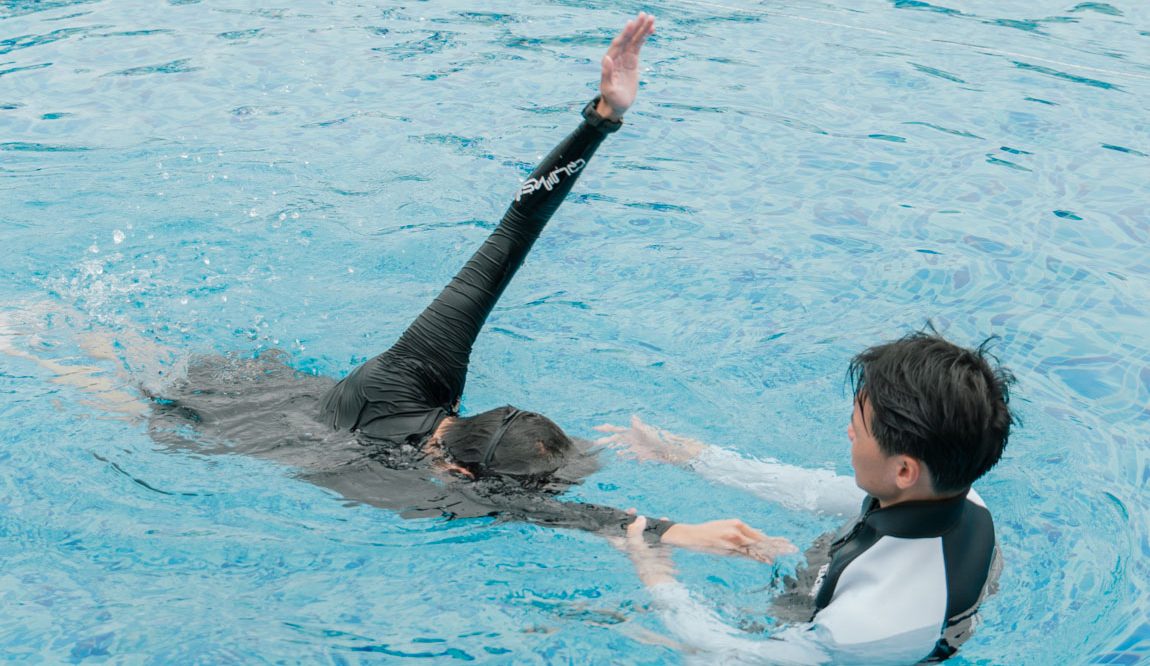
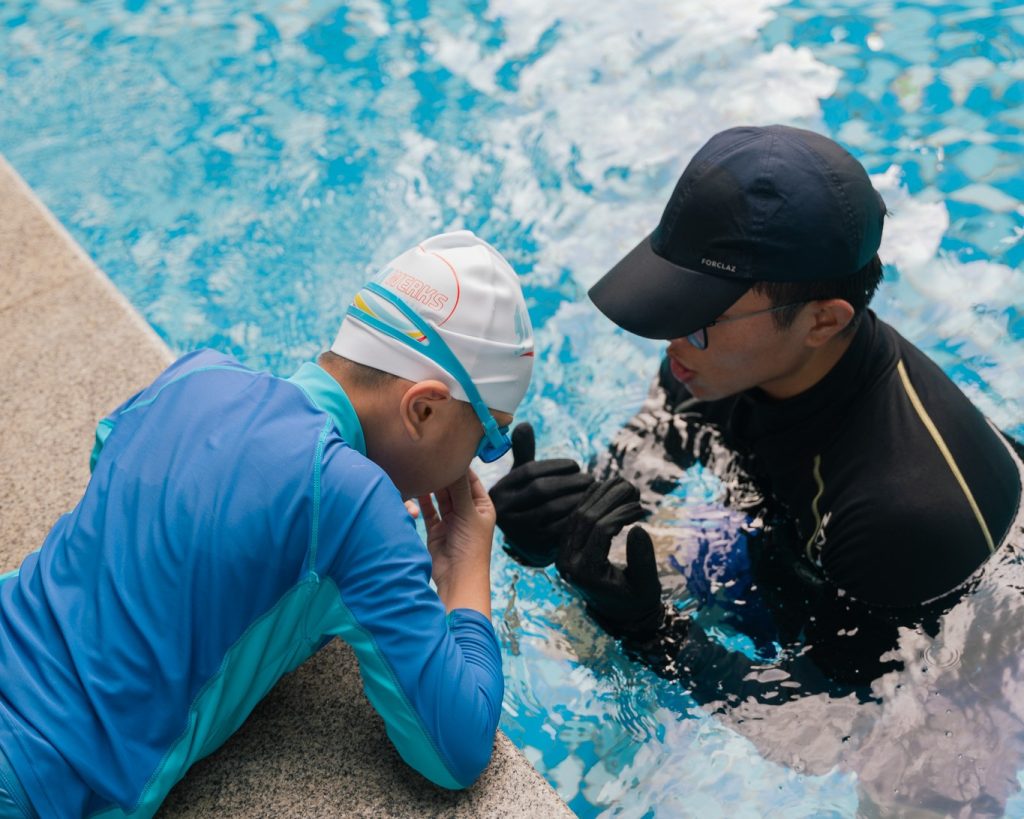
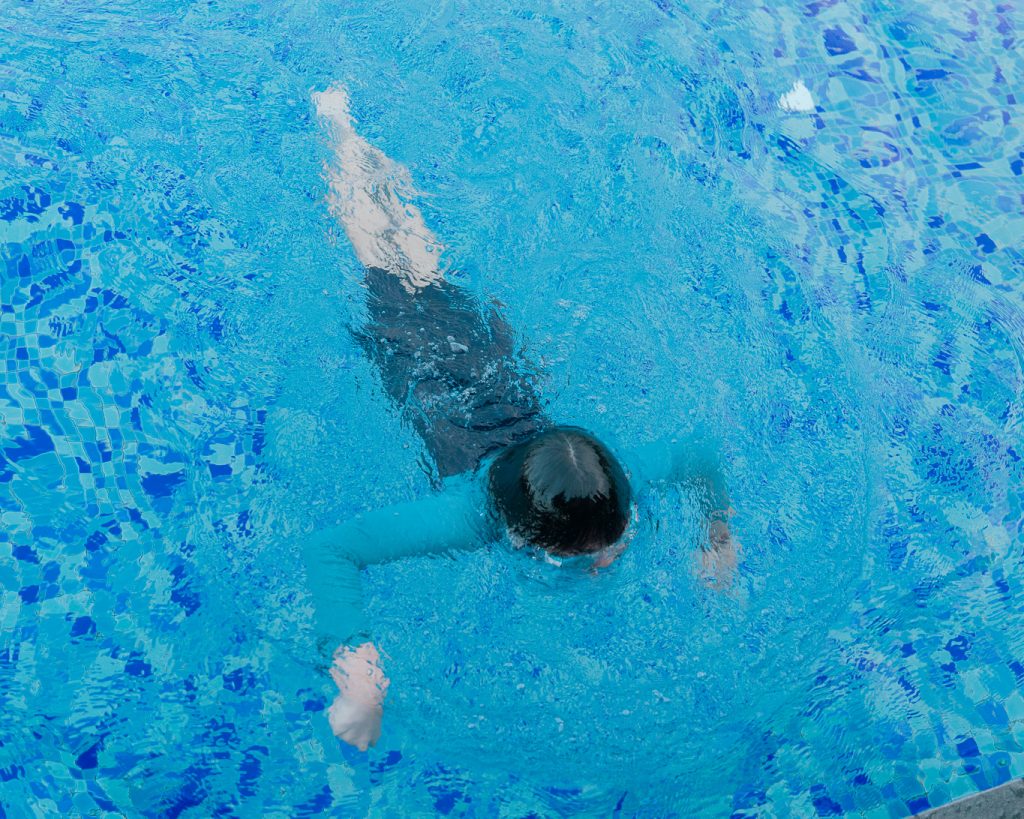
As you push off the wall and dive into the water, it’s common to feel that familiar burn in your lungs within moments. For many swimmers, that initial burst of speed underwater often dwindles quickly, which is why mastering your underwater swimming technique is essential. This technique can transform a frantic breath-holding experience into a smooth, controllable glide.
In this guide, we’ll explore the essentials of streamlined swimming, the dolphin kick, the advantages of underwater training, and crucial safety tips to ensure that holding your breath is a safe practice.
Table of Contents
What Is Underwater Swimming Technique?
Essentially, it’s about moving through the water below the surface in a tight, streamlined position, using kicks (like the dolphin or flutter kick) while keeping control of your breath.
Why is this important?
It matters because swimming underwater can actually be faster than swimming on the surface. For example, while freestyle can reach speeds of around 8 kilometers per hour at the surface, skilled swimmers can swim underwater at speeds of up to 10 kilometers per hour. This difference in speed is why swimming competitions have rules that limit underwater swimming.
That speed comes from physics. You can avoid the wave drag that slows you down when swimming on the surface.
How Do You Hold a Proper Streamline?
A good streamline means positioning your body in a narrow, straight line to reduce resistance as you swim. Here’s how to do it:
- Stack your hands: Put one hand over the other and lock your thumbs together.
- Squeeze your ears: Press your upper arms against your head to maintain that straight line.
- Engage your core: Tighten your stomach muscles so that your hips don’t sag.
- Point your toes: Extend your feet to minimize any additional drag.
This streamlined position is crucial for every push-off. If your streamline is weak, you’ll lose speed before you even start swimming.
What Makes the Underwater Dolphin Kick Fast?
It generates power from your hips and core, rather than relying on your knees. This creates a wave-like motion that propels you forward with less drag. Coaches often refer to the dolphin kick as the fifth stroke for its effectiveness. Here are some tips for performing a great dolphin kick:
Power source | Use your hips and core rather than bending your knees. |
Amplitude | Keep your kicks small and quick, avoiding large sweeping movements. |
Rhythm | Aim for a whip-like motion instead of stiff, paused legs. |
Position | Maintain that tight streamline without letting your arms drift apart. |
By keeping your kicks compact, you can prevent drag from slowing you down.
Benefits of Training Underwater Swimming
Training underwater offers several benefits. It enhances breath control, improves body position, and boosts your efficiency when turning. All of these improvements contribute to faster and more relaxed swimming on the surface. Here’s a breakdown of some benefits:
- Better breath control: Teaches you how to manage the urge to breathe calmly.
- Improved streamline: Reduces drag, making every lap quicker.
- Faster turns: Helps you gain vital meters that many swimmers overlook.
- Increased core strength: Powers your kicking and overall posture in the water.
Underwater Swimming Safety Rules
While there are clear advantages to underwater swimming, it’s crucial to prioritize safety. The most important rule is simply this: never hyperventilate before going underwater. According to the NCBI StatPearls, taking rapid, deep breaths can lead to a dangerous condition called hypoxic blackout, which is when your brain doesn’t get enough oxygen and you lose consciousness. This can happen in any depth of water, making it essential to follow safety guidelines. In fact, nearly 90% of drownings are preventable when appropriate safety measures are taken. Here’s a list to keep in mind every time you swim:
- Do not hyperventilate before submerging.
- Avoid playing breath-holding games that challenge time or distance.
- Always swim with a buddy or a lifeguard present.
- Listen to your body; surface immediately if you feel the need to breathe.
- Take just one normal breath before diving underwater.
When it comes to competitions, the World Aquatics organization has specific rules that state your head must break the surface by the 15-meter mark after starts and turns. If not, you could be disqualified from the race.
The Swimwerks Point of View
At Swimwerks, we view underwater skills as something to develop gradually, not a contest of how long one can hold their breath. Our coaches guide swimmers through building their technique step-by-step, starting with a strong streamline and short kick sets before extending any distances. We believe that chasing distance without supervision is risky and can lead to accidents; that’s why our structured lessons focus both on technique and safety.
frequently asked questions
Is underwater swimming harder than surface swimming?
Yes, it requires more control over your breath and core stability, but many swimmers find it more efficient once they refine their technique.
How long should I hold my breath underwater?
Only as long as feels comfortable. If you feel the need to breathe, come up immediately.
Why do competitive swimmers stop kicking at 15 meters?
This is a rule from World Aquatics that helps ensure safety and fairness in competitions.
Can beginners learn underwater swimming technique safely?
Absolutely, as long as they have supervision. Starting with short streamlines and single-breath kicks is essential for safety.
What is the fastest underwater kick?
The dolphin kick is the quickest and most effective method, driven by your hips while maintaining a tight streamline.
San Htar is the SEO Specialist at Swimwerks Singapore, where she manages SEO and content strategy. With several years of experience in digital marketing across Southeast Asia, she has worked across SEO, paid media, and content for businesses in multiple industries. At Swimwerks, she focuses on creating content that helps people in Singapore can actually find the information they need when looking for swimming lessons for their kids and adults. Swimwerks is one of Singapore’s trusted swimming schools, with over 6 years of experience, more than 1,000 students coached, and a presence across 30 locations island-wide, from ActiveSG pools to condominiums across Singapore.


