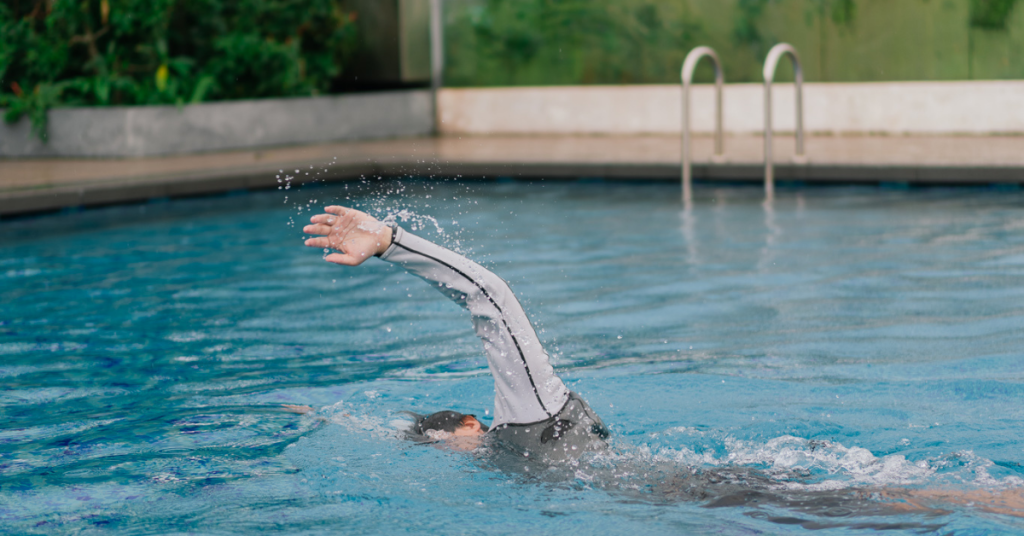
Most freestyle swimmers tend to breathe on the same side consistently. While it feels natural at first, this habit can lead to some issues: it throws off your stroke balance, puts strain on your neck, and limits how you strategize in races. That’s where bilateral breathing comes in, a fantastic skill for intermediate swimmers to develop which can help them address these problems effectively.
Table of Contents
What Is Bilateral Breathing in Swimming?
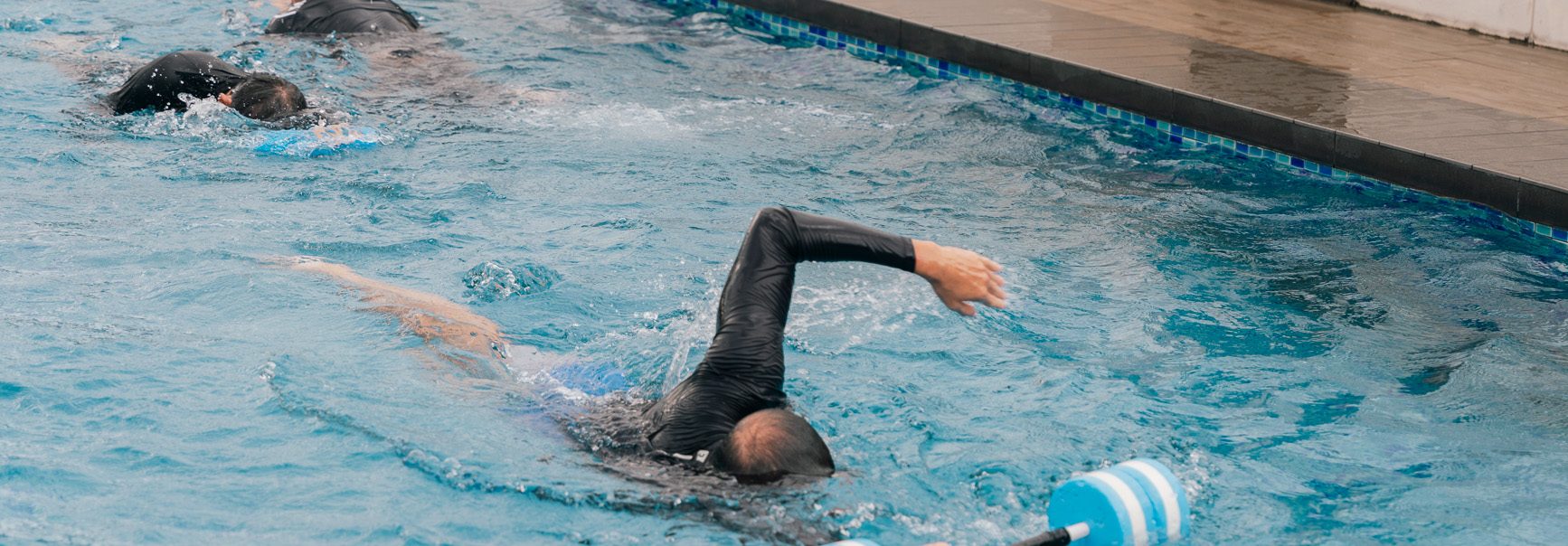
Bilateral breathing means that instead of just breathing to one side, you alternate your breathing by taking breaths on both sides of your body. Typically, swimmers will breathe every three, five, or seven strokes. Many beginners stick to unilateral breathing, which is inhaling on the same side every two strokes. This feels easier in the beginning, but it can create asymmetry in your stroke, hinder body rotation, and, over time, make your swimming less efficient.
It’s important to note that bilateral breathing doesn’t mean you have to take the exact same number of breaths equally on both sides during every swim. Instead, it’s about developing your stroke mechanics well enough on both sides so that you can choose where to breathe based on what’s happening in the race, rather than just sticking to habit.
Why Bilateral Breathing Improves Your Freestyle
Bilateral breathing offers three clear benefits for intermediate freestyle swimmers.
It helps correct stroke asymmetry.
If you’re always breathing on one side, the strength of your catch and pull on that side can weaken over time. Research published in the Journal of Human Kinetics found that swimmers who breathe on only one side tend to have more uneven strokes than those who breathe on both sides. This can cause them to slowly drift to one side when swimming in open water.
It Reduces Neck and Shoulder Strain
Constantly turning your head to one side can stress your cervical spine and trapezius muscles. By alternating sides, you distribute this load more evenly, which can help keep you feeling better during long swims.
It allows for a broader race strategy.
In open water competitions or triathlons, you often encounter choppy conditions that can push waves from one direction. With bilateral breathing, you can keep water out of your mouth regardless of which side the waves are coming from. In pool racing, it enables you to keep an eye on competitors on either side without losing your rhythm.
Common Mistakes Swimmers Make
Holding your breath too long when switching to a 3-stroke pattern
This can happen because you may feel anxious about that extra stroke. A good way to overcome this is to build your tolerance for carbon dioxide through specific training drills.
Over-rotating towards your weak side
This usually means your rotation on your non-dominant side isn’t developed yet. Drills with a kickboard and practicing side-kicking can help with this.
Breaking your rhythm to force a breath
This issue can stem from treating breathing on your non-dominant side as if it’s a completely separate skill. Instead, practicing catch-up drills with a focus on bilateral timing can help.
Dropping your elbow on your weak side
A lack of awareness about how your body is moving might lead to this. Filming your stroke from above can give you great insights into your technique.
How to Learn Bilateral Breathing: Step-by-Step
To learn bilateral breathing effectively, there’s a step-by-step approach you can take over three to four weeks of consistent practice:
1
Start by focusing on your weak side. Swim 25 meters, breathing only to that side. Yes, it will feel off, but give it a couple of sessions.
2
Next, introduce the three-stroke pattern. Breathe every three strokes in a relaxed manner during low-intensity sets. Keep your pace slow so you can maintain good form.
3
Gradually add some hypoxic sets. During your sessions, try swimming 25 meters while breathing every five strokes. This can build your tolerance for CO2, making it easier to rely on bilateral breathing when you race.
4
Use film to analyze your stroke. Underwater footage from different angles can show you asymmetries that might be hard for your coach to see in person. If you’re at Swimwerks, we often utilize in-pool video as part of our freestyle drills.
5
Finally, test this technique at a faster pace. Once the three-stroke pattern feels second nature, try it during a tempo set. If your form struggles, it may be worth returning to drills for a bit.
When to Use Bilateral Breathing in Racing vs. Training
Knowing when to use bilateral breathing while swimming can really set apart skilled swimmers from the rest. When you’re training, it’s best to use bilateral breathing for all aerobic workouts and technique drills. Save unilateral breathing for those sprint intervals, where getting as much oxygen as possible is key.
In races, top swimmers switch to unilateral breathing in the last 50 meters. It allows them to breathe more frequently and it is crucial for pushing hard at the finish. Because they have trained both breathing patterns, they can choose the one that works best during a race.
For shorter races, FINA-level sprint freestyle events (50m, 100m), it’s rare to see swimmers use bilateral breathing at full speed. However, in longer events, like the 200m and upwards, bilateral breathing can really help manage their pace and keep their form strong as they finish up.
Swimwerks Recommendation
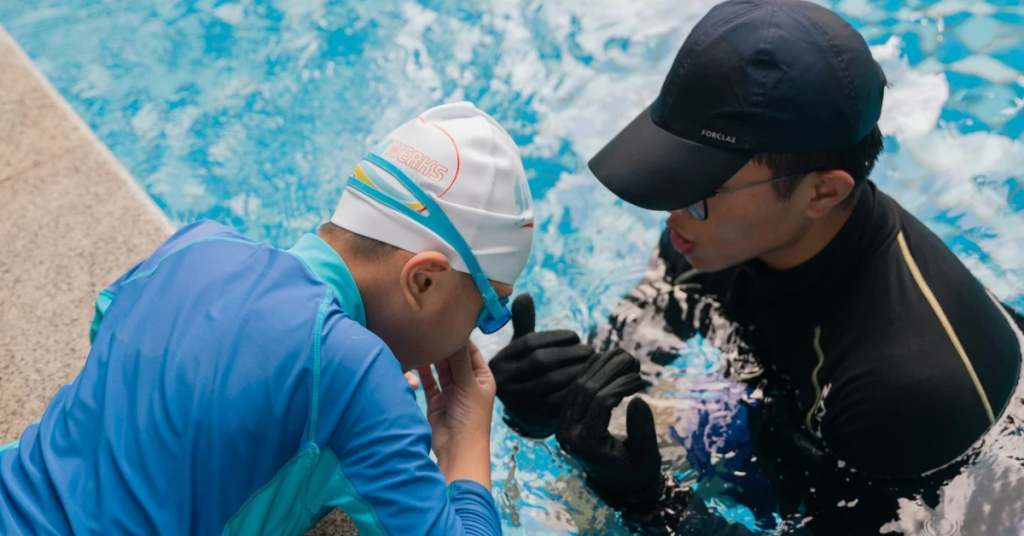
At Swimwerks, we help intermediate swimmers learn bilateral breathing once they can swim 200 meters of freestyle smoothly. Forcing it earlier on can make swimmers anxious and disrupt their rhythm before they’ve really mastered the basics. Our lessons are designed for each swimmer’s skill level, and our coaches are here to support you in improving your technique.
Whether you’re focusing on bilateral breathing or starting fresh with your freestyle, we’ll guide you through the process. Reach out to us to get started!
frequently asked questions
Is bilateral breathing harder than regular breathing?
Yes, it can be tricky at first. Most swimmers take about three to four weeks of practice to feel comfortable.
Should beginners learn bilateral breathing swimming straight away?
No, beginners should first focus on developing a smooth, continuous freestyle stroke on one side. Bilateral breathing is best introduced once they can manage 200 meters continuously.
Does bilateral breathing slow you down?
Yes. Breathing every three strokes gives less oxygen compared to every two strokes. However, swimmers often find they feel stronger at race pace once they become accustomed to the technique.
Can I use bilateral breathing in open water?
Definitely! In open water, bilateral breathing has its advantages. It lets you sight the shoreline, navigate choppy waters, and keep an eye on competitors without interrupting your stroke.
San Htar is the SEO Specialist at Swimwerks Singapore, where she manages SEO and content strategy. With several years of experience in digital marketing across Southeast Asia, she has worked across SEO, paid media, and content for businesses in multiple industries. At Swimwerks, she focuses on creating content that helps people in Singapore can actually find the information they need when looking for swimming lessons for their kids and adults. Swimwerks is one of Singapore’s trusted swimming schools, with over 6 years of experience, more than 1,000 students coached, and a presence across 30 locations island-wide, from ActiveSG pools to condominiums across Singapore.