
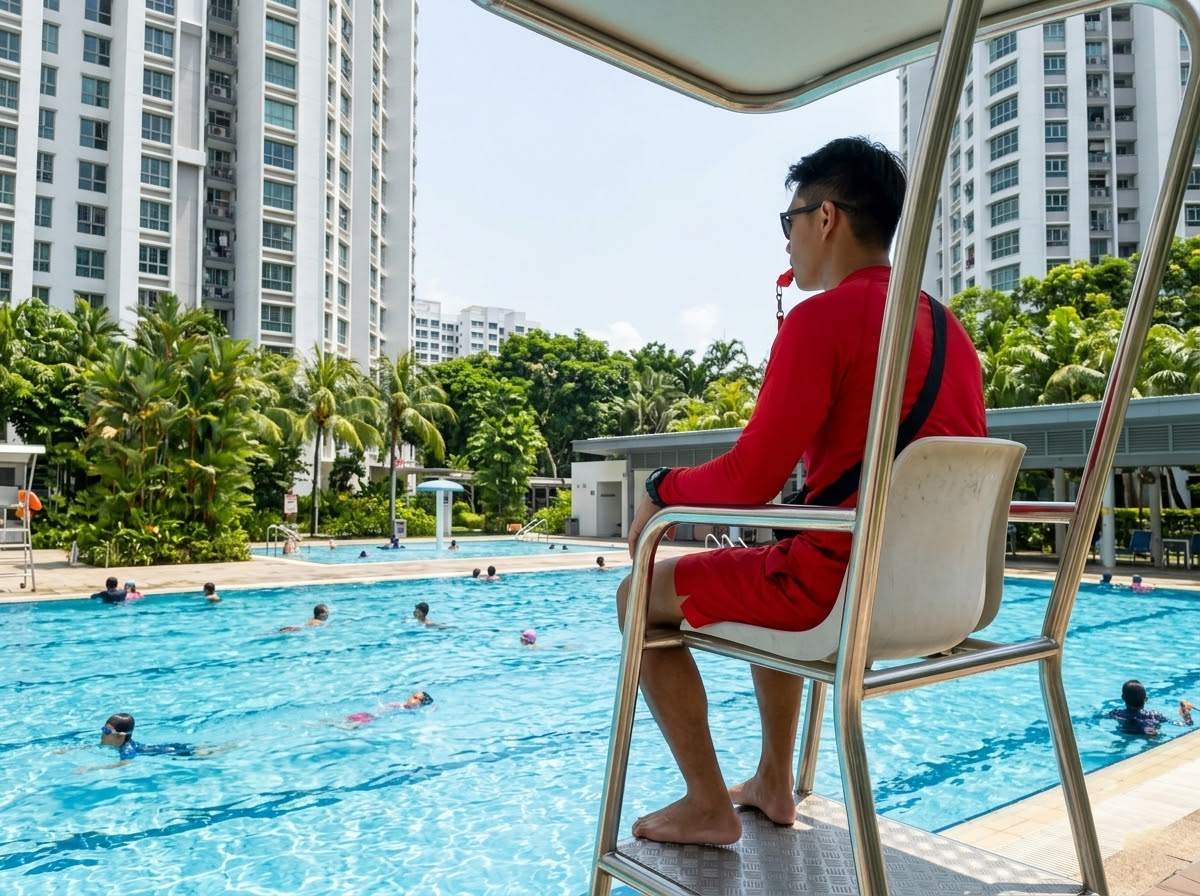
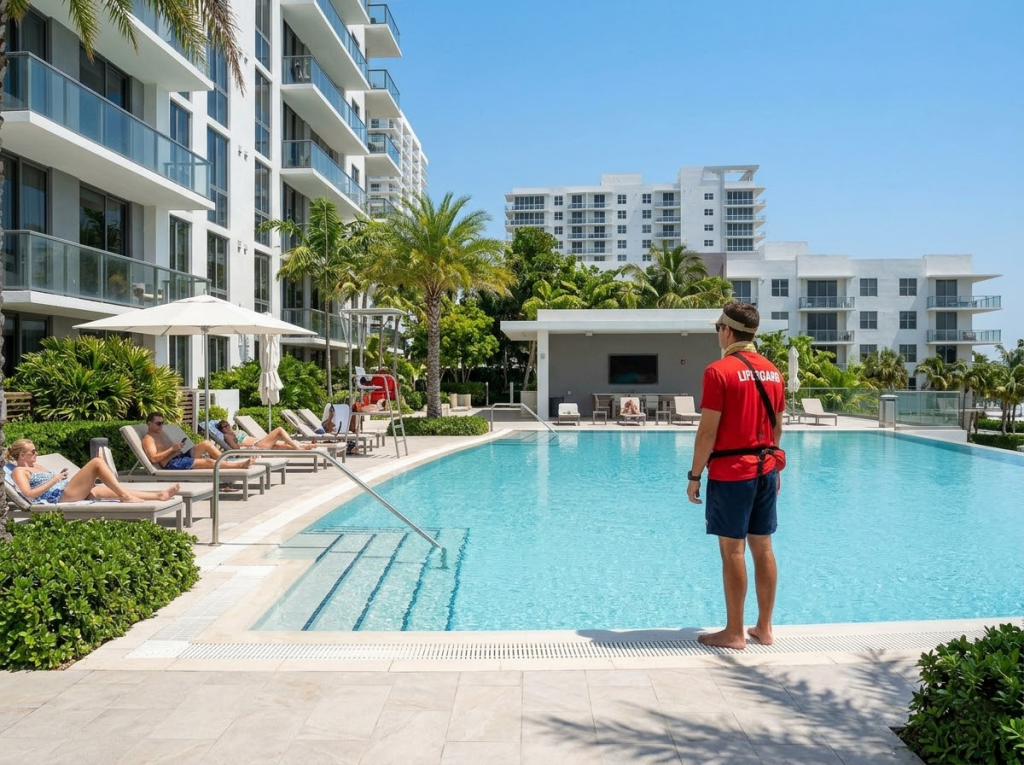
Before contacting any provider, determine the exact environment where the person will work. Different venues require different levels of supervision.
Common situations where people hire lifeguards in Singapore include:
Each situation may require a different number of staff members or different experience levels. For example, a children’s birthday party at a condo pool may only need one person. A large event with many swimmers may require multiple workers monitoring different zones. For instance, a corporate team building event might feature floating obstacle courses. This setup blocks the line of sight and demands a larger team to watch all angles. Knowing the type of venue and the expected number of swimmers helps a provider recommend the right staffing level.
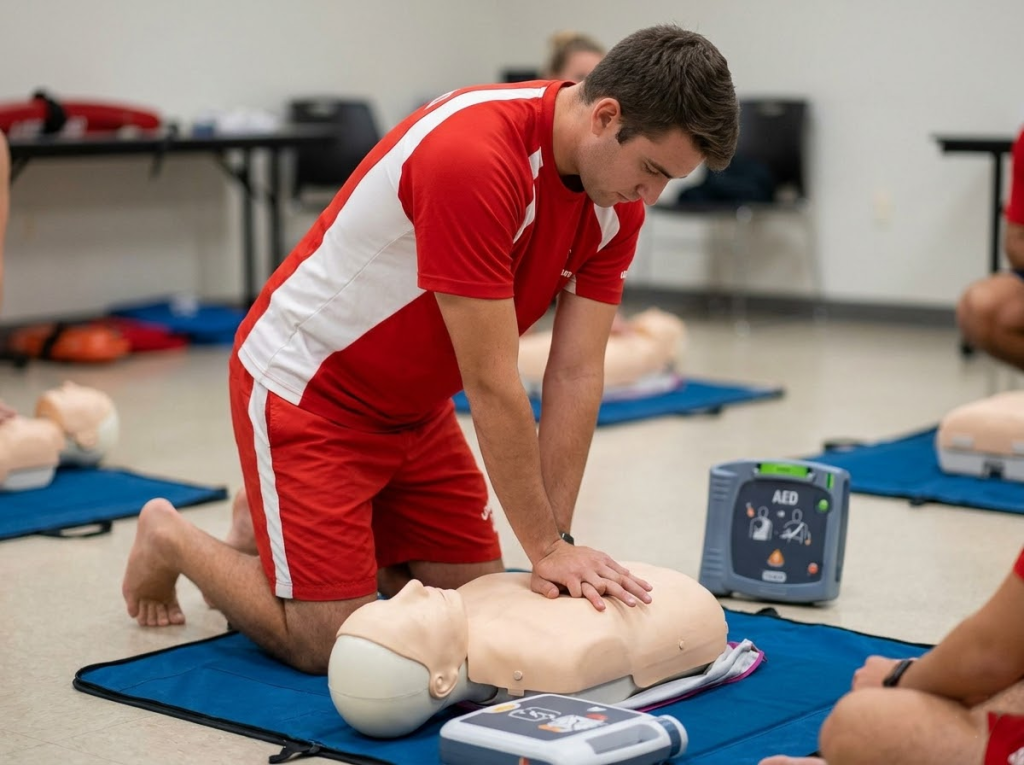
Certification is one of the most important factors when deciding how to hire a lifeguard. In Singapore, professional staff typically complete lifesaving training recognized by the Singapore Life Saving Society (SLSS).
The SLSS is the certifying body for lifesaving courses such as:
These strict standards ensure the person sitting in the chair has the physical strength and medical knowledge to act immediately. Furthermore, many roles also require valid medical certifications. A sudden cardiac arrest requires immediate chest compressions and an electrical shock to restart the heart. Because of this, guards must hold a valid Cardiopulmonary Resuscitation (CPR) and Automated External Defibrillator (AED) certificate.In Singapore, these medical certificates are accredited by the Singapore Resuscitation and First Aid Council (SRFAC) and are strictly valid for only two years. After two years, the worker must pass a refresher course to prove their skills are still sharp.
When looking for a service, always ask what specific certifications their team holds and check the expiration dates. A professional provider should be able to confirm their staff qualifications and training background easily.
Training alone is never enough. Experience plays a massive role in how effective a person can be during real situations.
Experienced workers are much better at:
A veteran worker knows how to spot a tired swimmer before they even ask for help. They also know how to politely speak with a guest who refuses to follow pool rules.
When comparing providers, ask about the types of venues they typically cover. A service that regularly works with hotels, schools, and large events will often be better prepared for high-traffic swimming areas.
It also helps to work with companies that have a strong track record with well-known clients. This usually shows that their services are trusted by organizations that require the highest safety standards.
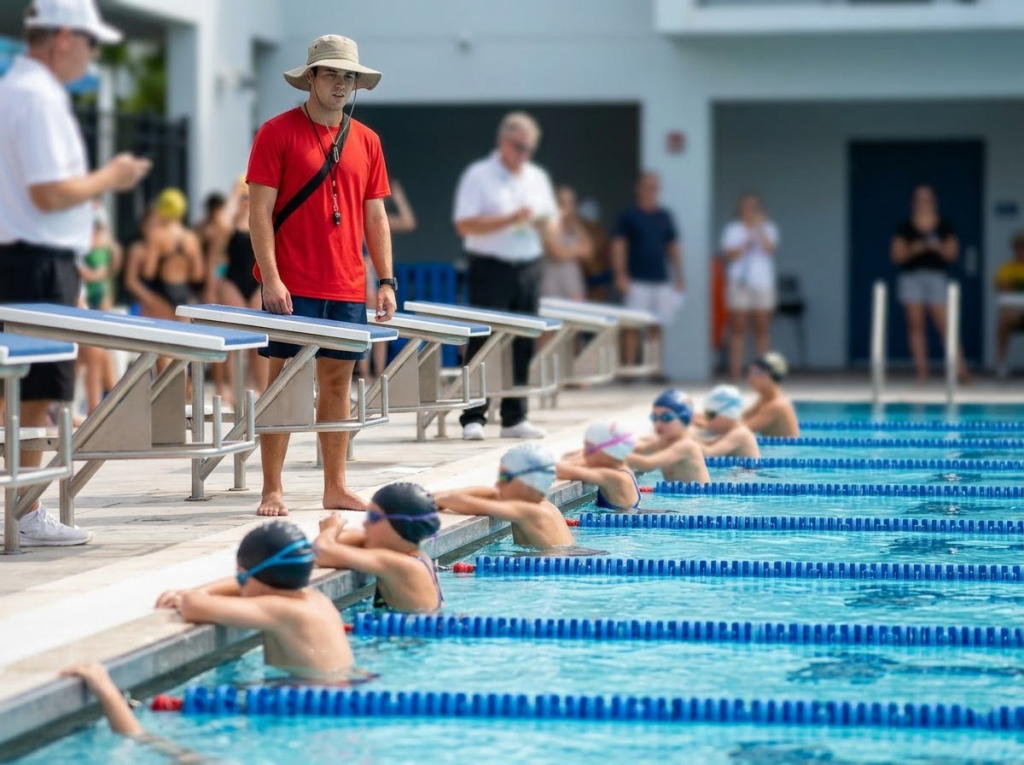
Another step in how to hire a lifeguard is understanding what the provider will supply during the booking. Some services simply send personnel to monitor swimmers.
Others offer additional support such as:
Clarifying these exact details ahead of time helps avoid confusion during the event. You should also confirm the working schedule. Some bookings require coverage for a few hours while others require daily supervision for ongoing facility operations.
For simple bookings such as a small weekend pool party, services may be available on very short notice. Larger events or massive venues often require much more planning. Booking early allows the provider to visit and review your venue in person. They can assess the pool depth, find blind spots, and recommend the right staffing level based on hard data.
This site visit ensures that everyone is positioned properly around the pool or aquatic area on the day of the event. A proper risk assessment takes time. Planning ahead also reduces last-minute scheduling issues and ensures you get the most experienced staff available.
One of the easiest ways to handle how to hire a lifeguard is to work with an experienced service provider. Professional companies already manage recruitment, training, and scheduling. This makes the entire process faster and far more reliable.
Swimwerks is a trusted safety provider in Singapore, offering reliable coverage for hotel pools, universities, clubs, and open water venues. Having a highly trained team supervising your aquatic activities makes a major difference in preventing accidents and handling sudden emergencies.
Beyond simply providing experienced staff, we offer a full range of water safety and education services:
For property managers and event planners looking for dependable aquatic support, we offer a practical and highly safe solution. We ensure that your guests can enjoy the water with total peace of mind.

Ariel Myat is the SEO Executive at Swimwerks Singapore, where she manages SEO and content strategy. With several years of experience in digital marketing across Southeast Asia, she has worked across SEO, paid media, and content for businesses in multiple industries. At Swimwerks, she focuses on creating content that helps people in Singapore can actually find the information they need when looking for swimming lessons for their kids and adults. Swimwerks is one of Singapore’s trusted swimming schools, with over 6 years of experience, more than 1,000 students coached, and a presence across 30 locations island-wide, from ActiveSG pools to condominiums across Singapore.