
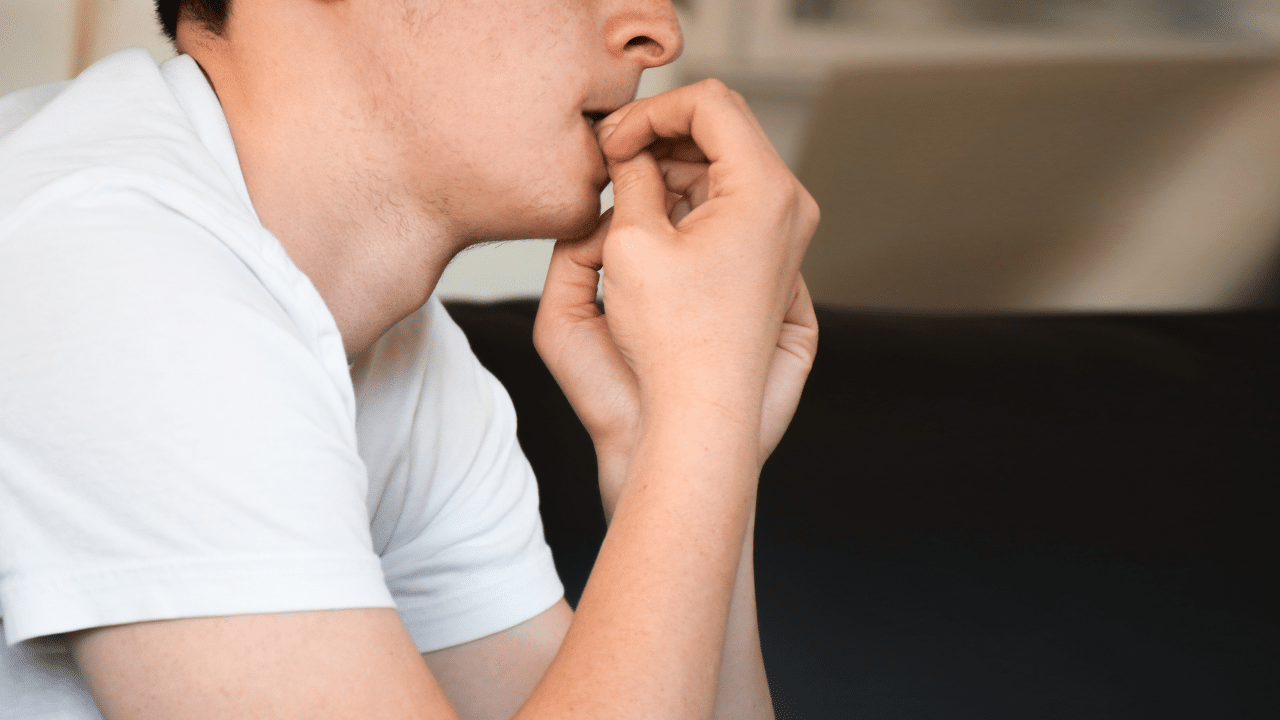
Fear of drowning is one of the most common swimming fears, and it usually shows up as a specific worry about deep water where your feet cannot touch the ground: the deep end, a lake, or the ocean.
The reassuring part is that floating depends on factors such as body position, lung volume and body composition, rather than body type alone.
As long as you maintain a good body position and keep your muscles relaxed, your body can stay close to the surface with less effort.
Many adults describe the feeling less as danger and more as helplessness – the sense of losing control of a body that usually does what it is told.
Here’s what you should know: tense muscles can make swimming more difficult and cause you to tire sooner because a stiff body is less efficient in the water.
Staying calm is therefore more than just a state of mind; it can help you move more efficiently and conserve energy.
Water near the nose and mouth makes almost every beginner flinch, and your first instinct may be to hold your breath and clamp your mouth shut.
But that instinct can create the tight-chested feeling and breathlessness a few seconds later that may lead into full panic attacks for some people!
Those symptoms can feel alarming, but they can be caused by changes in your breathing pattern rather than a sign of immediate danger.
The fix is small and completely learnable: breathe out slowly, breathe in, and repeat instead of holding your breath, so you can maintain a steady breathing rhythm.
One traumatic experience, such as being pushed into the water as a child or swallowing a mouthful of water during a lesson, can unconsciously shape how a person feels about the pool for years.
True phobic disorders around water are less common than ordinary unfamiliarity, and both can respond to a patient approach.
Additionally, plenty of adults are less scared of the water itself than of looking clumsy in front of friends or a pool full of strangers, and that quiet worry can keep people out of the water for years.
Parents should take note as well, since children can read your body language and model their behaviour on. you.
While fear may keep us safe, it also stops us from moving forward. To help you get past the obstacle, here are some expert tips to help you relax during your first swim!
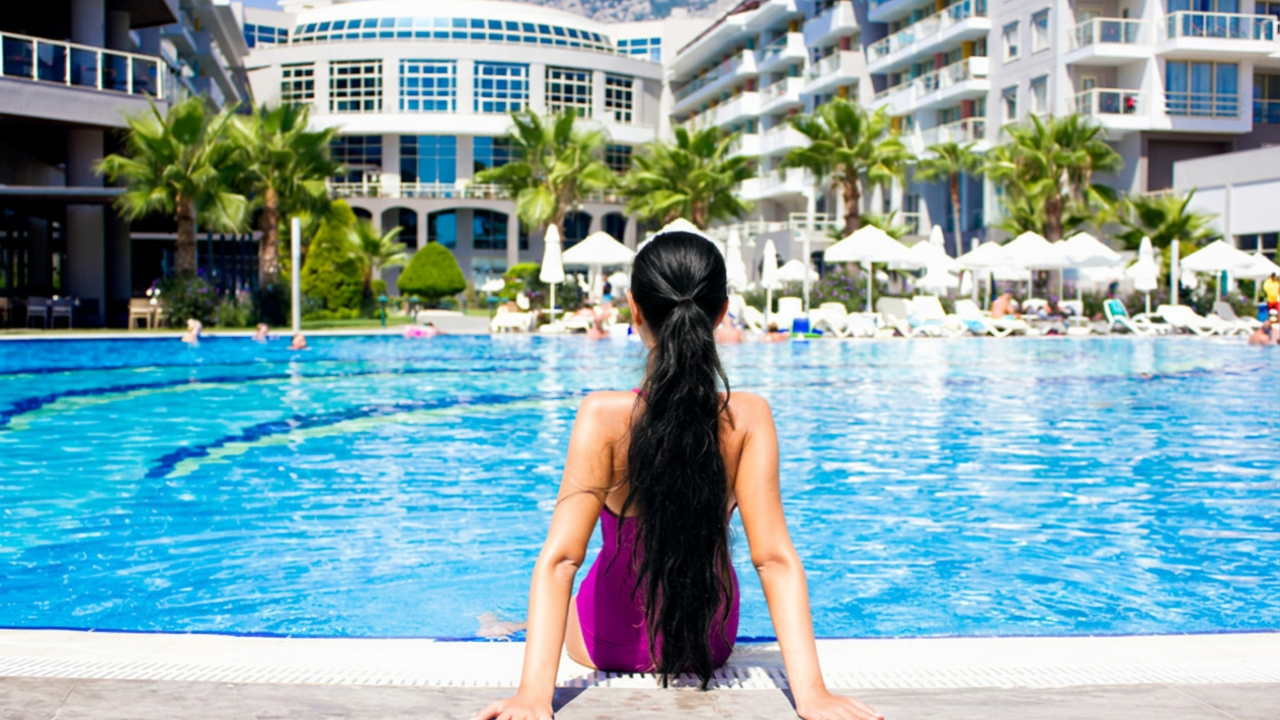
If you’re nervous in the water, you don’t have to jump straight into the deep end. Getting comfortable gradually gives you time to adjust to how the water feels and build confidence without taking on too much at once.
So, build your own ladder. Begin by simply sitting on the pool edge with one foot, then both, in the water.
Next session, wade in waist-deep and walk a width. Then try going chest-deep and splashing your face. Move up a stage when the previous one starts to feel manageable.
You can even start at home by letting the shower run over your face. Slow and unglamorous is exactly how people overcome a fear of water, and each small success gives you the confidence to explore the next step.
Getting into cold water can make you gasp, breathe faster and feel your heart rate rise. For a nervous beginner, these physical sensations can make the water feel more intimidating than it actually is.
A sudden drop in skin temperature can trigger a cold shock response, which includes an involuntary gasp and rapid breathing. These responses are strongest during the first few moments of immersion and gradually settle as your body adjusts.
Instead of jumping straight in, lower yourself into the pool slowly. Wet your arms, shoulders, neck and face first, then hold onto the wall and give yourself a few minutes to adjust to the temperature.
Once your breathing settles, the water will often feel much more comfortable. Recognising that these initial sensations can be a response to the temperature may also help you avoid mistaking them for a sign that something is wrong.
If you’re going to take one habit from this article, make it this one: don’t hold your breath with your face underwater.
Hum or blow a slow stream of bubbles so your lungs are constantly emptying you can take another breath when needed.
Breath-holding can cause a nervous swimmer to spiral into anxiety, while continuous exhalation can help prevent that feeling from building.
You can practise this technique in stages: chin on the surface while blowing bubbles, then mouth and nose in for five seconds, and finally your whole face with goggles on.
Controlled breathing can also help with the anxiety that comes with feeling uncomfortable in the water. A 2021 study published in Scientific Reports found that a single five-minute session of deep, slow breathing reduced self-reported anxiety in both younger and older adults.
Practise slow, controlled breathing regularly outside the pool, then use the same steady rhythm when you swim. The aim isn’t to force yourself to relax, but to give your body a familiar breathing pattern to fall back on when you feel tense.
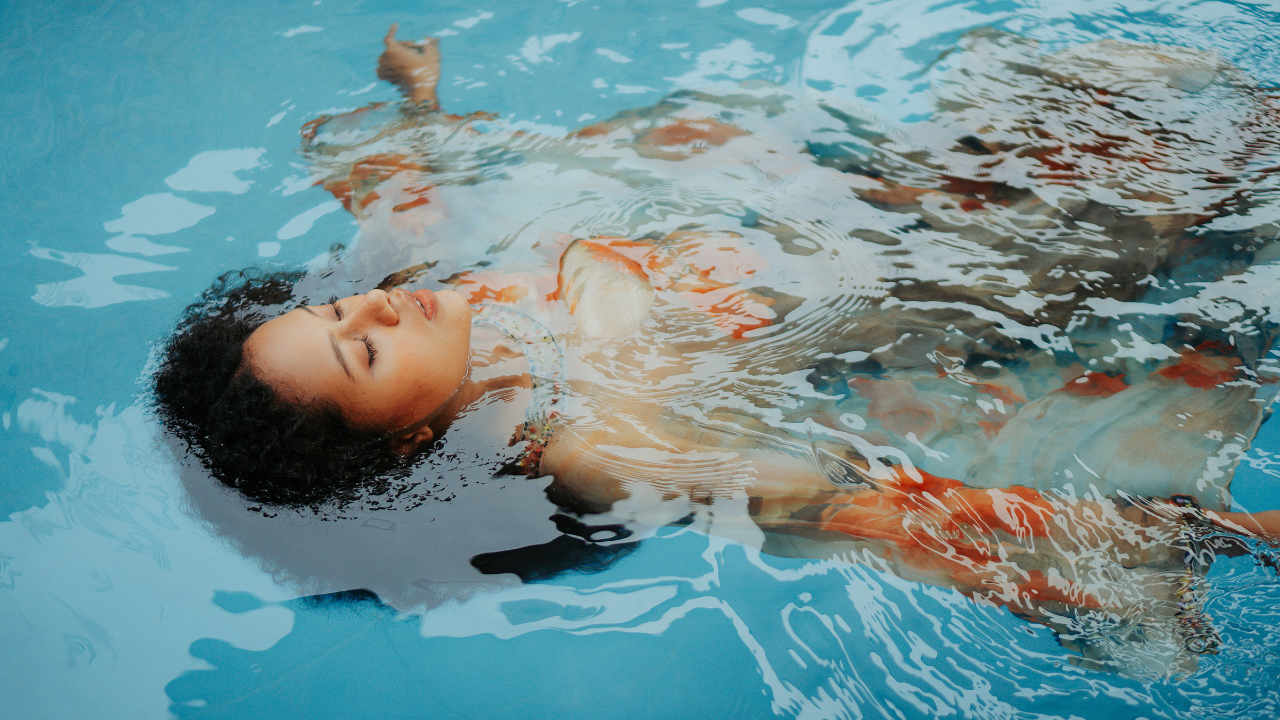
Floating is where many nervous beginners have their breakthrough because it is the first time you feel the water supporting you.
It can also become your rest position, which makes everything else less intimidating.
In chest-deep water, take a big, slow breath, lean back gently, and let your ears sink under. Keep your chin lifted and your eyes on the sky or ceiling, since looking at your feet can cause your hips to drop.
Spread your arms and legs wide like a starfish, and keep some air in your lungs to help you stay buoyant.
To stand back up, tuck your chin, bring your knees to your chest, sweep your arms forward, and plant your feet on the floor.
Most tension comes from fighting the water, and a relaxed body can move through it far more efficiently than a rigid one. The best way to feel this is with a push-and-glide.
Stand with your back to the wall, push off gently with your arms stretched ahead, and do nothing else. Just notice how far you can travel on your own.
This is also how you can slowly build water confidence through simple swimming movements.
There’s no shame in using extra support while you build technique. Kickboards, noodles and life vests can be useful tools, best treated as a stage on the way to independence rather than something to avoid using.
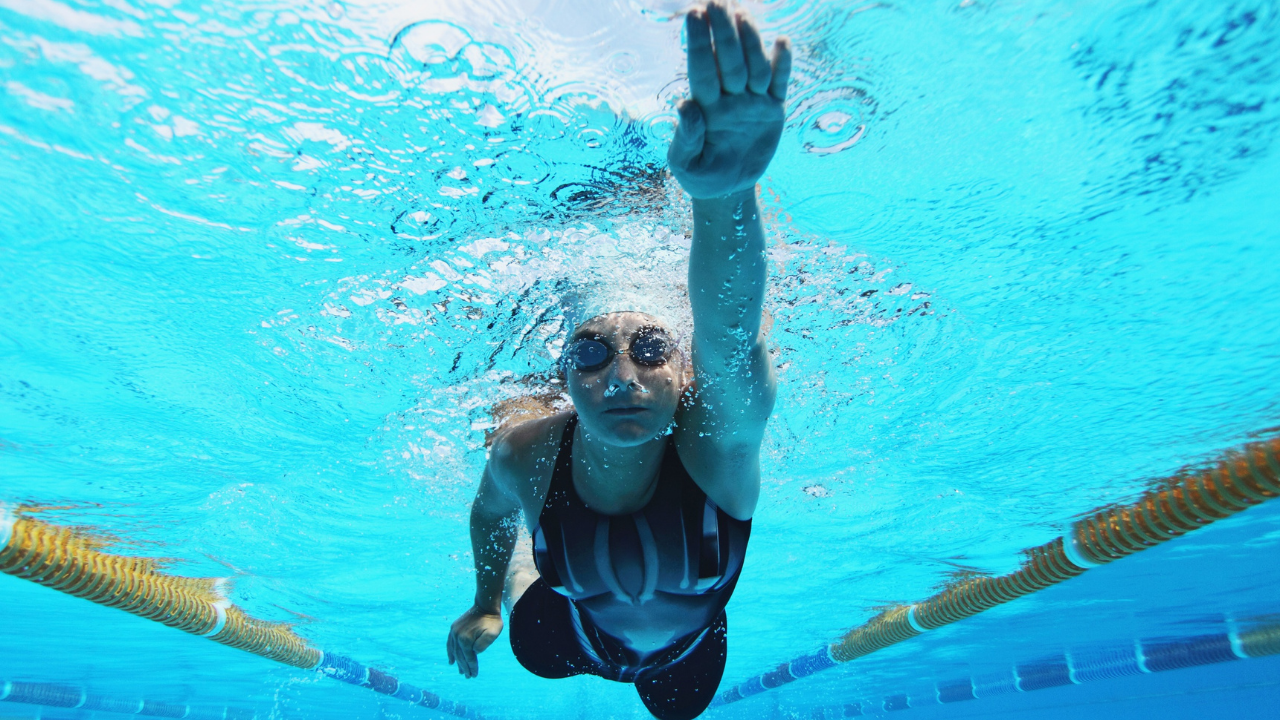
Nervous beginners almost always swim too fast, and rushing can leave you breathless. Deliberately slowing your stroke tempo lowers your oxygen demand, gives you more time to exhale fully, and can help prevent breathlessness from being mistaken for panic.
Alternating strokes can also help. Breaststroke keeps your head up and is often an easier place to coordinate breathing, since your face naturally lowers as your arms reach forward and lifts as they sweep back in.
To calm yourself even more, sync your breathing to your movement and pick one thing to focus on each length: the pressure of water on your palms, the sound of your own bubbles, or the temperature against your skin.
Matching your breathing to movement can turn a lap into something closer to a moving meditation, and make it much harder to feel anxious when your mind has a job to do.
Give yourself full permission to stop at the wall whenever you like. Frequent, planned breaks can stop tension from building up throughout a session and give you a way to manage your anxiety.
Two or three easy widths, followed by a rest, is a perfectly reasonable way to train.
A mental cue helps too. One short phrase, such as “long and loose” or “blow it out”, can help re-anchor your focus whenever your mind starts to race.
What’s more, set realistic goals for each session. One small win per session is genuine progress, whether that’s a five-second float or a full length without stopping.
The day you finally let go of the wall and float unaided can feel enormous, and it may arrive sooner than you think as you put in consistent effort.
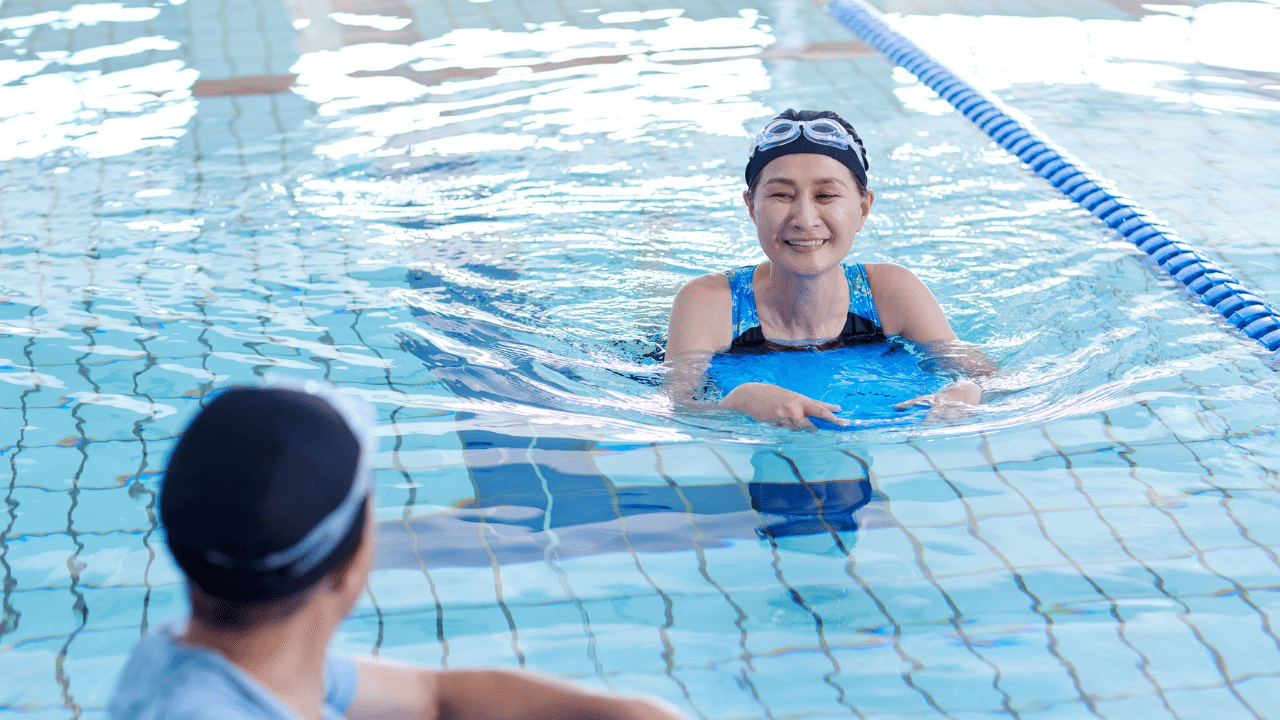
Techniques only work within a sensible setup, so keep these ground rules in place while you practise:
Never practise alone. Use a supervised pool with a lifeguard on duty every time, and bring a friend along if it helps you feel more comfortable.
Stay within standing depth until floating, gliding and standing up feel familiar. Deep water can wait, and open water swimming, with its currents and unpredictable conditions, should come later.
Practise little and often. Two short, productive sessions a week can be more manageable than one long afternoon.
This is also where self-teaching reaches its limit. Almost everyone who has managed to overcome fear of water did it with someone qualified beside them, and there is a good reason for that.
A trained instructor can spot tension you cannot see in yourself, help you maintain a better body position, and adjust each next step so you are always a little challenged and never overwhelmed.
That is also what helps manage risk, because there will always be a professional ready to step in the minute something goes wrong.
Structured swimming lessons are built on the same principle: Singapore’s SwimSafer syllabus starts Stage 1 with nothing more ambitious than entering the water, blowing bubbles and holding a five-second float, because confidence is developed progressively.
Learning alongside someone who has guided plenty of people who have felt exactly the way you do can turn a daunting first session into something you look forward to.
Swimwerks coaches hold qualifications and certifications, such as those from the National Registry of Coaches and Swim Schools International, and every lesson opens with an assessment of your water confidence and ability before any new skill is introduced.
Adult swimming lessons here are designed for complete beginners and for anyone dealing with a fear of water, with a plan customised to you.
Prefer not to learn in front of an audience? Our private option runs at ActiveSG pools across the island, including your own condo!
There are also female swimming lessons with qualified female coaches for women who feel more at ease one-to-one or in a small group, and kids swimming lessons following the SwimSafer syllabus if the whole family wants to gain confidence together.
WhatsApp us now and start your swimming journey with confidence!