
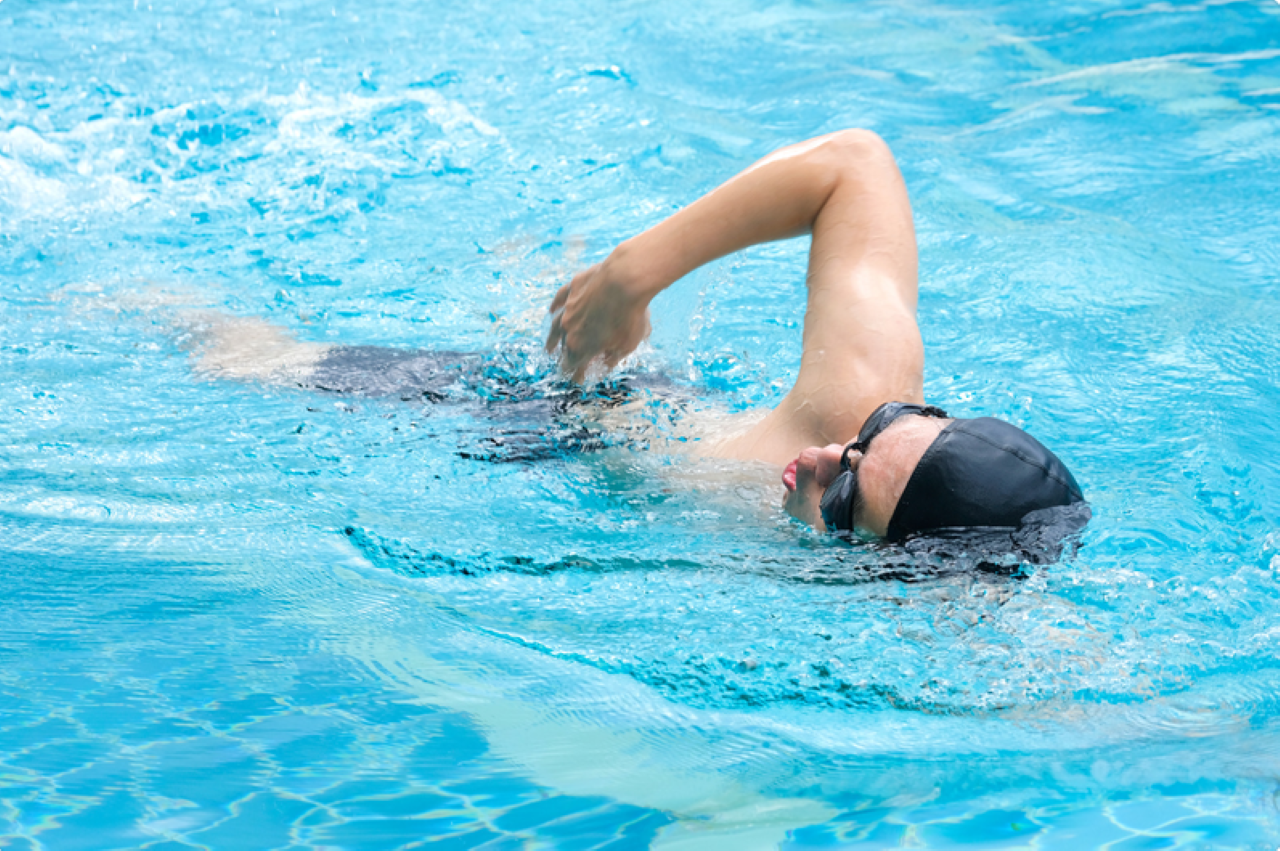
One of the biggest factors that can affect swimming speed is your body position in the water. The goal is to keep your arms and legs in a streamlined position, as close to the water’s surface as possible, without creating unnecessary tension.
When your hips and legs sink, more of your body is exposed to resistance, creating drag and making every stroke more demanding.
You may be putting in more effort, but some of that effort can be lost to increased drag.
To help maintain a better body position, keep your head in a neutral position and look down and look towards the bottom of the pool. Engage your core and back muscles without creating unnecessary tension, and aim to keep your body long in the water.
A better position overall can help you move with less resistance. Once you become comfortable maintaining this position, more of your effort can go towards creating forward propulsion rather than overcoming drag.
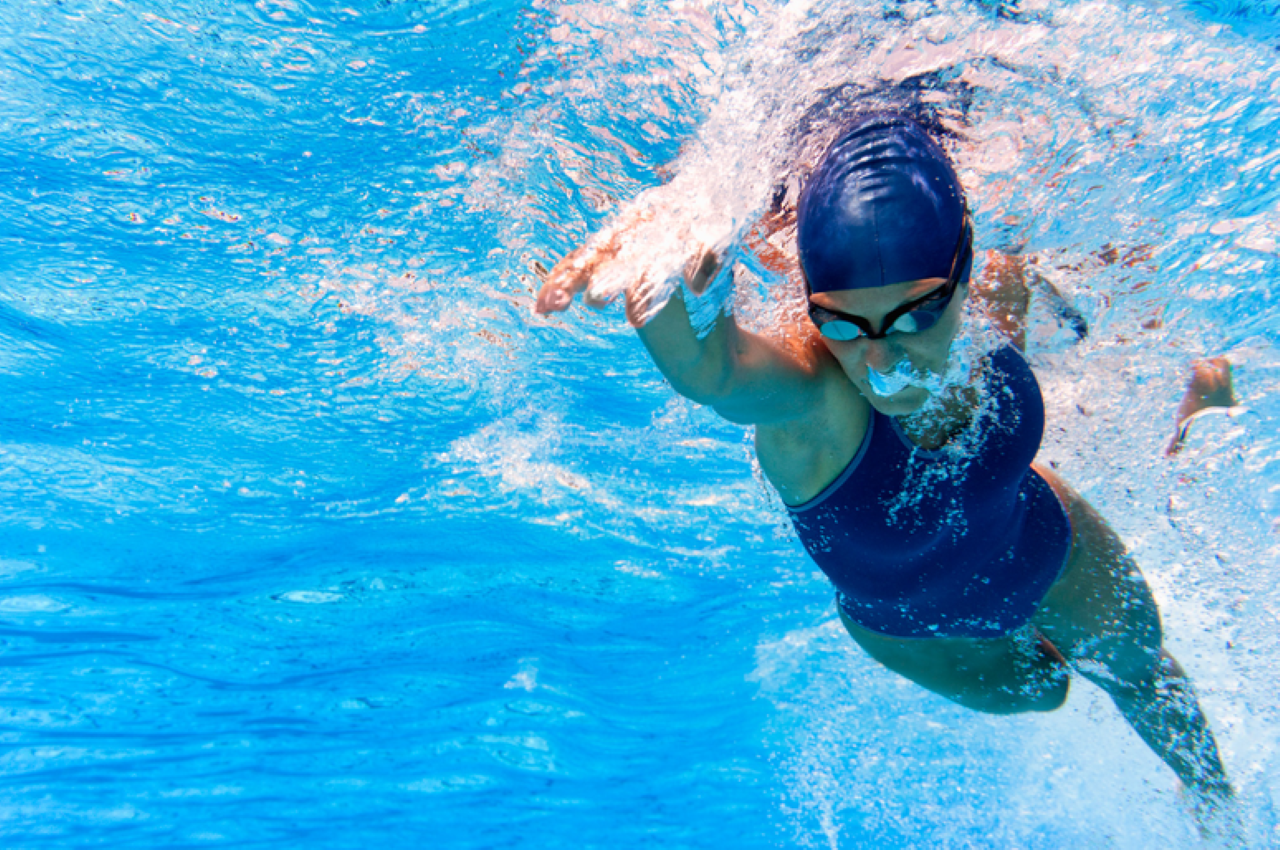
Your stroke is another major factor that can affect how fast you swim. That said, a faster stroke rate does not automatically mean faster swimming!
If you spin your arms quickly without applying force effectively, you may increase your effort without gaining much speed.
Instead, focus on creating strong, controlled movements that allow you move efficiently through the water with each stroke cycle.
With a front crawl, for instance, pay particular attention to your hand entry, catch, pull, and recovery. Your hand should enter the water smoothly, while your hand and forearm work together during the catch and pull to create propulsion.
A high-elbow position during the underwater phase can also help you set up an effective catch, although the ideal position will vary depending on your technique and individual mobility.
Overall, good stroke mechanics can help you more forward movement from each stroke while maintaining a steady pace with less wasted effort.
Many swimmers do not initially realise how much breathing can affect swimming speed. Poor breathing technique can quickly disrupt your swimming technique.
For example, lifting your head too high to exhale completely will drop your hips and legs, resulting in increased drag.
Instead, practise turning your head to the side while keeping one goggle close to or in the water. This allows your head to move with your body’s natural rotation rather than lifting your entire head upwards.
You can also practise rhythmic breathing patterns to maintain consistent swimming swimming rhythm. Keep in mind that there are specific patterns suited to different factors such as your stroke, pace, distance, and individual needs.
Regardless of your swimming goal, it helps to regularly practice the proper way to breathe in the water. When breathing becomes controlled and feels like second nature, you can maintain a better body position and improve stroke efficiency!
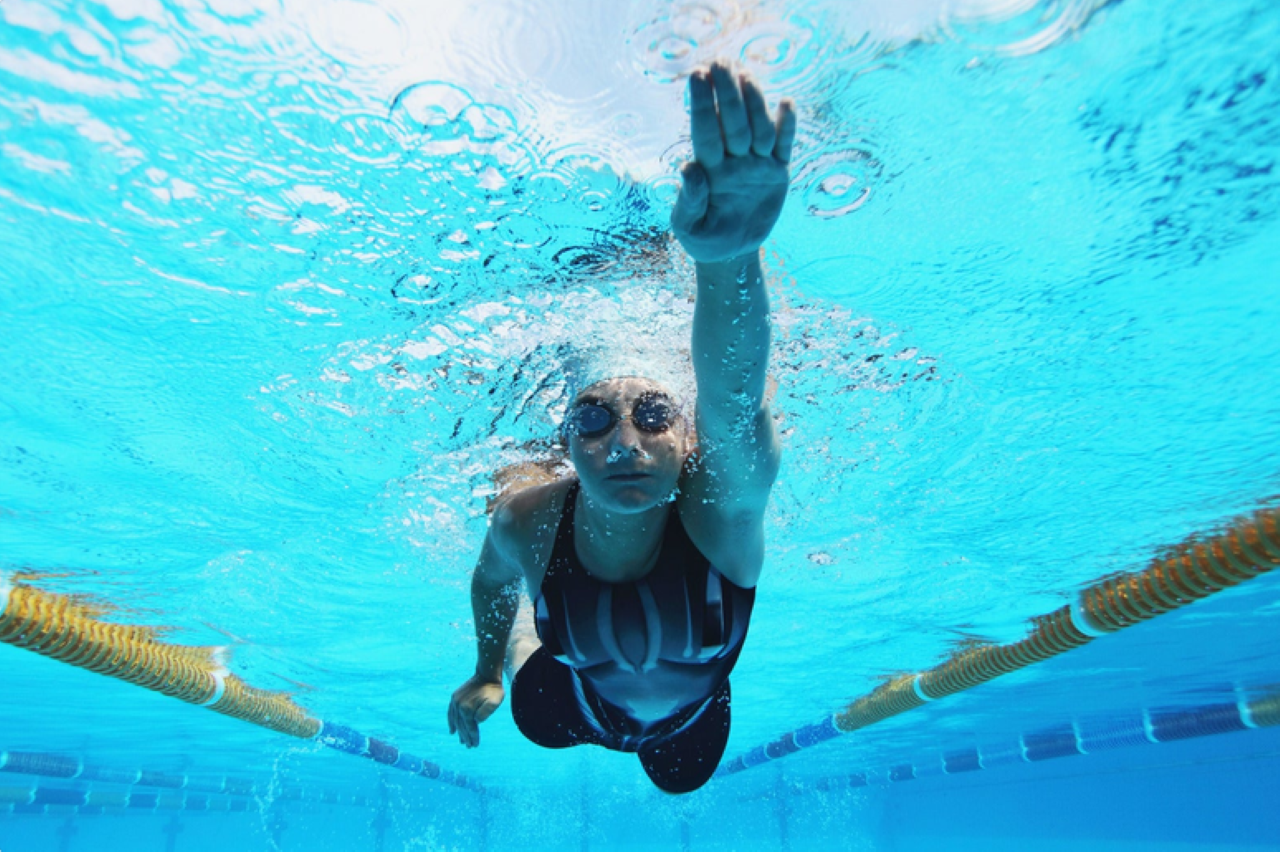
A good underwater kick can help keep your body position higher in the water while also contributing to forward movement. On the other hand, a poor kick can create unnecessary drag or use more energy than necessary.
In freestyle, kicks should primarily originate from the hips, with relatively relaxed ankles and pointed toes. Keep your knees bent slightly and avoid making excessively large movements that increase resistance.
A steady, efficient kick can contribute to better body position and propulsion without unnecessarily increasing your energy expenditure.
Interval training involves structured swimming efforts with planned periods of rest or easier swimming between them. For example, you could swim a short distance of 100m at a challenging but controlled pace and repeat it 10 times with a set amount of recovery between each effort.
This type of training plan allows you to practice swimming at speeds that may be difficult to maintain over long distances and durations. Short intervals of high-intensity sets ensure that you swim with good technique while also improving your pacing over time.
As you improve, you can adjust the distance, number of repetitions, pace, and rest time. Remember, the aim is to develop your ability to swim at higher speeds while maintaining effective technique.
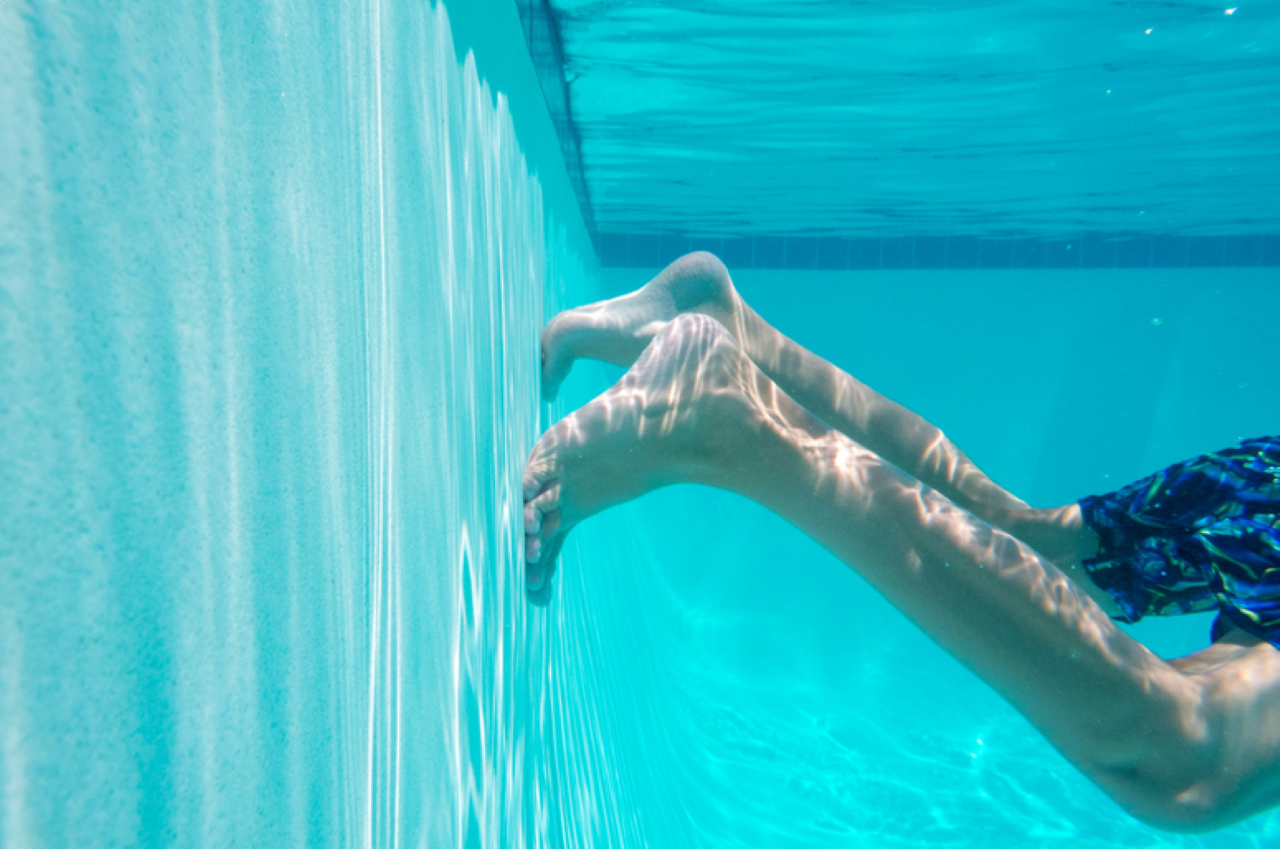
Starts and turns can have a major impact on your overall time and lap speed. With a strong push-off, a streamlined position, and efficient turns, you can cover more distance without taking additional strokes.
After pushing off the wall, avoid breaking your streamlined position too early. Keep your upper body and legs straight, and allow your momentum from the propulsive force to carry you through the initial part of the push-off before transitioning back into your stroke.
When practising turns, pay attention to your timing, approach to the wall, rotation, and push-off position. When your turns become automatic, you can increase acceleration through the walls by creating more propulsion instead of slowing down to prepare for them!
Having good core strength will help you keep your body in a straighter position, allowing you to put more of your effort into powerful forward movement.
You do not need complicated exercises to build a stronger core either. Planks, side planks, dead bugs, Russian twists, and other controlled core exercises can all strengthen the muscles involved in stability and body control.
As you engage your core with each stroke, you’ll be able to have a better position in the water, reduce drag, and swim faster!
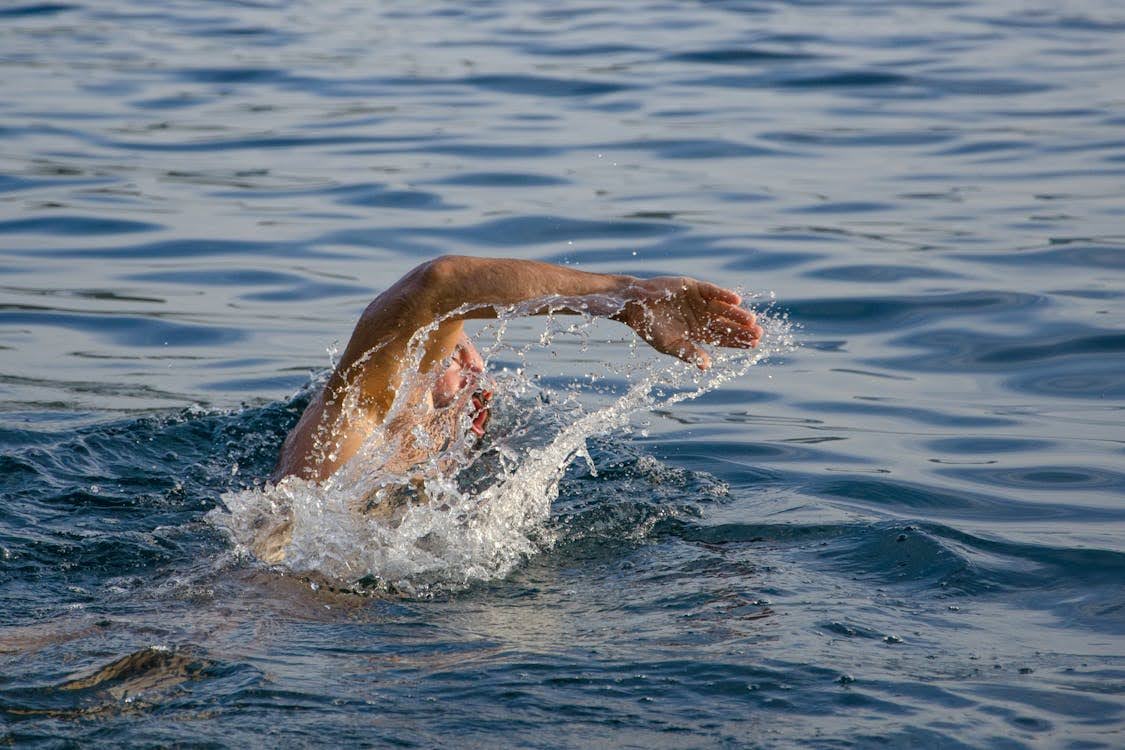
Another way to develop swimming strength is to incorporate resistance tools into your training. Tools such as resistance bands, swim parachutes, and drag socks add drag, forcing your muscles to work twice as hard.
The general idea is that they make swimming more demanding, which will ultimately help you to develop the strength and power needed for faster movements.
While these tools help, learning to use them efficiently matters just as much. Instead of using them throughout your entire workout, use resistance tools for short, focused sets.
Using resistance in a controlled way in your swim training can help you gradually become accustomed to swimming against additional drag without allowing your technique to deteriorate.
Using too much energy during the first few laps can leave you fatigued and cause your speed and technique to decline as the swim continues. This is where pacing becomes important.
Essentially, good pacing helps you make better use of your energy
If you’re working on longer distances, start by finding a pace you can maintain consistently. From there, you can focus on gradually increasing speed and aim for negative splits, where the second half of a swim is faster than the first.
As you improve your pacing, remember not to let your stroke technique fall apart simply to maintain a faster pace.
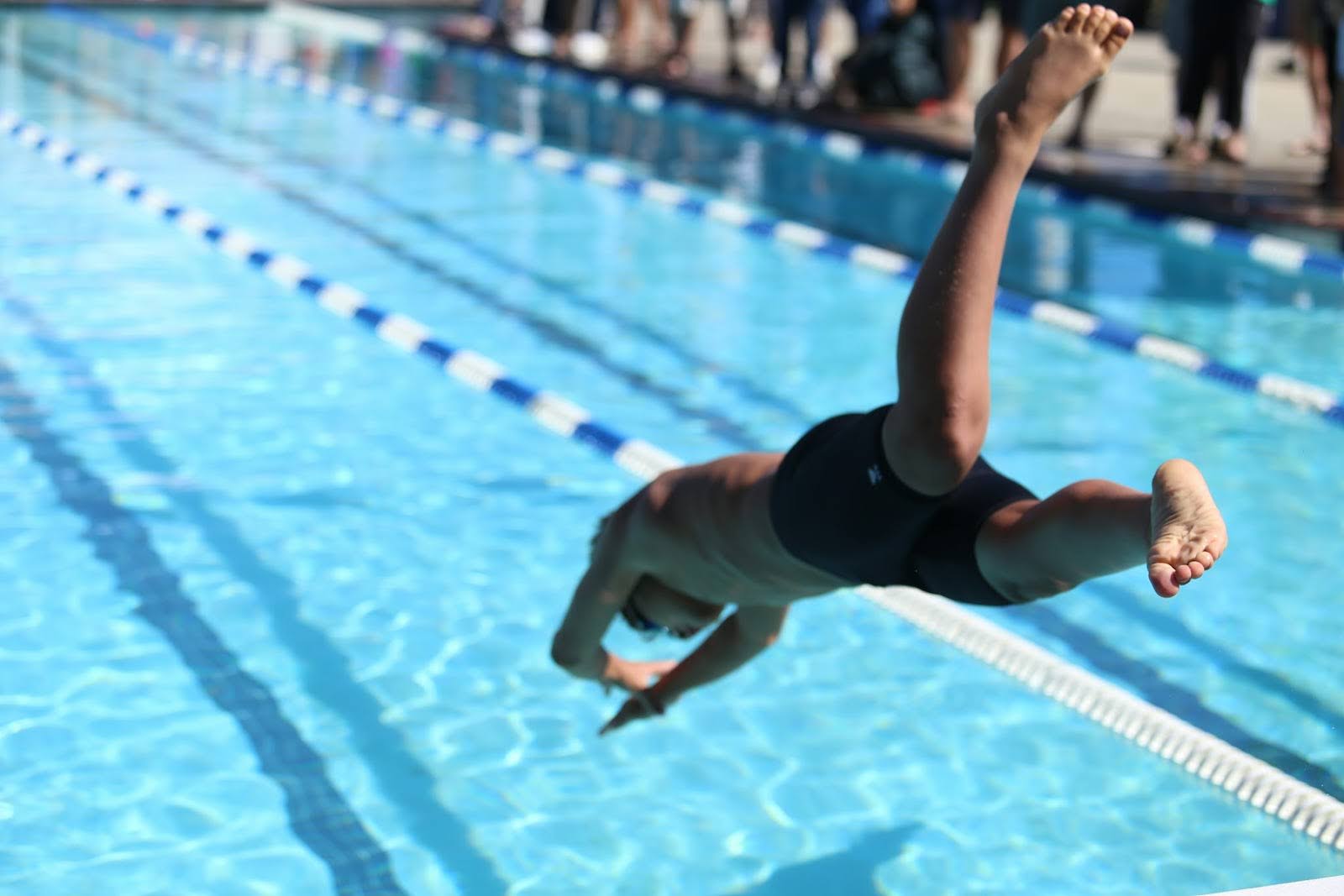
In addition to your legs, your upper body also has a role in creating propulsive force during swimming strokes.
Dryland strength training that targets the upper body can significantly impact your swimming speed and muscle endurance.
Exercises such as pull-ups, rows, weightlifting, bodyweight exercises, and other controlled strength movements are a great way to develop your strength.
On that note, focus on controlled movements and good form rather than simply lifting the heaviest weight or choosing the most challenging exercise.
Developing upper-body strength can support your ability to apply force during the pull phase of your stroke, although strength gains need to be combined with good swimming technique to translate into faster swimming.
Professional swimmers often look smooth in the water because they waste very little energy.
Pay attention to movements that prevent significant speed gains, including:
Excessive head movement
An overly large or inefficient kick
Allowing your legs to sink
Excessive tention in your body
Unnecessary movements during your stroke
At the same time, you should not try to make your strokes completely rigid. Efficient swimming still requires natural rotation, coordination, and movement through the water.
Speed refers to your ability to move through the water quickly. It heavily depends on technique, body position, power, coordination, stroke rate and your ability to reduce drag.
Swimming endurance, on the other hand, refers to your ability to sustain physical effort over a period of time. Good endurance can help you maintain your pace and technique during longer swims.
If your goal is to swim faster, a combination of technical work, speed training, and appropriate conditioning can help. The balance between these elements will depend on factors such as your current ability, swimming distance, and goals.
Improving your swimming takes time and consistency. To support your training, it is also important to incorporate recovery days and include adequate hydration and nutrition.

It can be difficult to know for certain whether your training is working if you do not measure your results. Tracking progress not only ensures you identify changes in your performance but it also helps keep you accountable.
Use a journal to record specific details such as pace, distance, and stroke count, and how you felt during each session. This should give you a clearer picture of how your performance is changing over time.
For example, you may find that you can swim the same distance in a similar time while taking fewer strokes, a strong sign that your stroke efficiency has improved.
You can also use wearable devices such as smartwatches to track various swimming metrics, making it easier to monitor your sessions.
Overall, keeping simple records and regularly assessing your performance can help you identify what is working and where you may need to make adjustments.
A structured training plan can make it easier to work towards specific swimming goals.
Start with the exact outcome you want to achieve – be it achieving a faster pace over a specific distance or building endurance to feel less tired during your sessions – and build workouts around that goal.
Depending on your objectives, you can incorporate sprint training, interval sets, endurance sessions, technique drills, and dryland exercises into your programme.
Training is also not just limited to pools, as dryland exercises complement swimming performances by building strength, power, and flexibility.
With several weeks of focused, structured training, you should see improvements in your swimming capabilities.
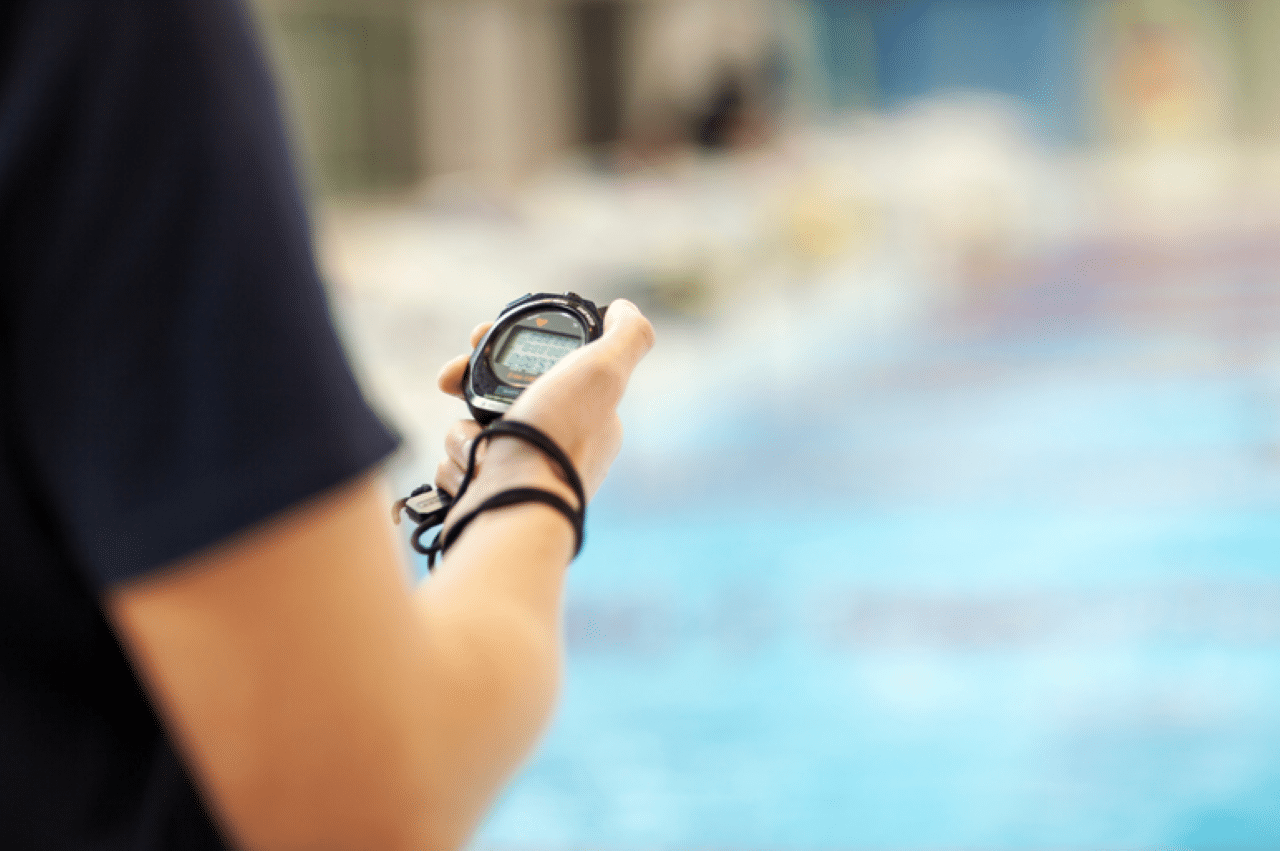
Sometimes, you cannot feel the mistakes you are making while in the water.
In these situations, a qualified swimming coach can observe your technique, identify these problem areas, and demonstrate ways to correct them.
Getting feedback can also help you avoid repeatedly practising inefficient movements. This allows focused training that is better able to gradually increase your speed and efficiency.
Most of all, instructors are capable of reducing injury risk so you can swim without worrying about hurting yourself in the process.
Improving your swimming is not only about how hard you train. It’s important to give your body time to recover between sessions.
Rest and recovery can look like:
Getting enough sleep
Staying hydrated
Maintaining a balanced diet
Taking it easy during training
When your muscles have the time to repair and recharge, you can return to training better prepared for your next session and reduce the risk of accumulating excessive fatigue.
So, if rest isn’t already in your routine, consider including it as part of your efforts to achieve your swimming goals!
Improving swimming speed is a useful goal, but knowing what to work on can be challenging when you are training on your own. Professional coaching can help you identify technical areas that may be holding you back.
At Swimwerks, we provide swimming lessons designed to help swimmers build confidence and swim efficiently, no matter where you are on your journey!
With small group sizes in each session, our locally and internationally certified coaches can provide guidance based on your current ability and goals.
If travelling to a pool is an issue, we also bring our swim lessons to many condominiums across Singapore and can accommodate lessons at selected preferred locations.
Ready to work on your swimming technique and speed? Contact us today to find out how our swimming lessons can support your goals