
Every swimming stroke exists to move the body forward through the water, and its mechanics generally come down tofour variables: body position, arm movement (one arm at a time or both together), leg kick, and breathing technique.
Legs perform one of four main kick families:
The flutter kick (small, fast, alternating motion)
The whip kick or frog kick (simultaneous — knees draw up, feet turn outward, sweep together in a circular motion)
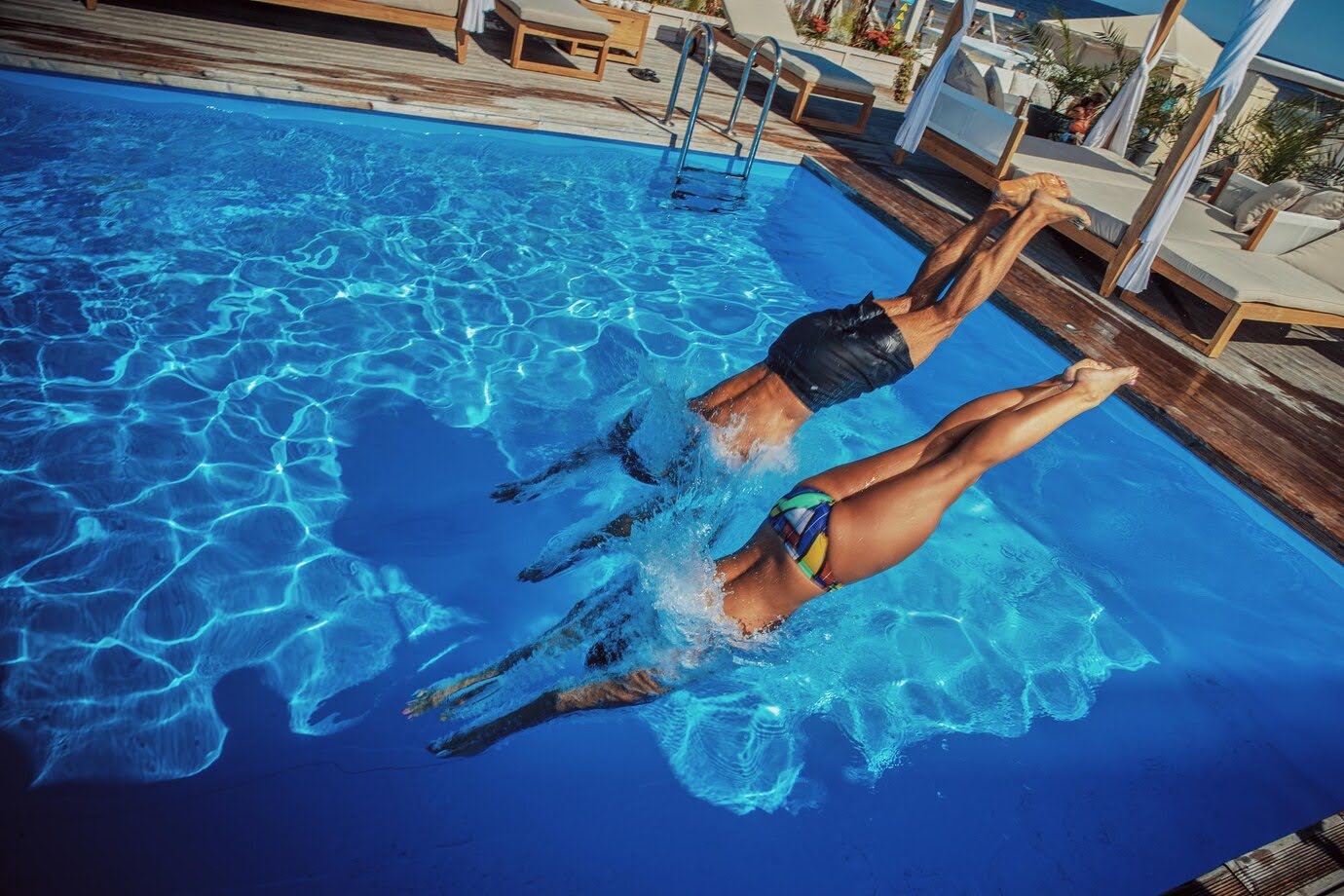
The dolphin kick (pointed feet, both legs moving together in a wave-like motion)
The scissor kick (reserved for strokes swum on the side)
Keeping your body horizontal also matters more than beginners assume — lift your head to breathe too aggressively and your hips sink, so swimming starts to feel like wading uphill.
And because water is roughly 800 times denser than air, a gentle swim still provides resistance for a full-body workout while placing less impact on the joints than many land-based exercises.
There are four main competitive swimming strokes that make up an individual medley, which World Aquatics rules require to be swum in a fixed order: butterfly, backstroke, breaststroke, then freestyle.
While each stroke has distinct mechanics and techniques that affect its efficiency and speed, learning different strokes can also introduce variety to your training and work different muscle groups.
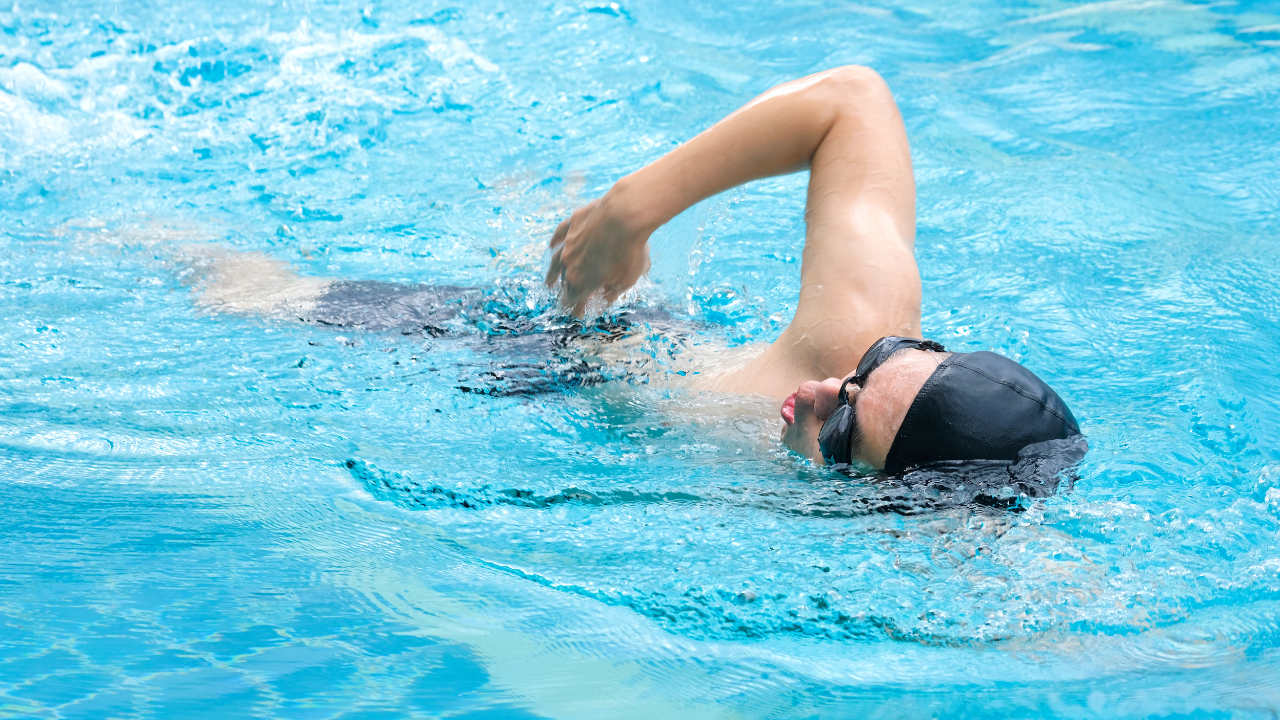
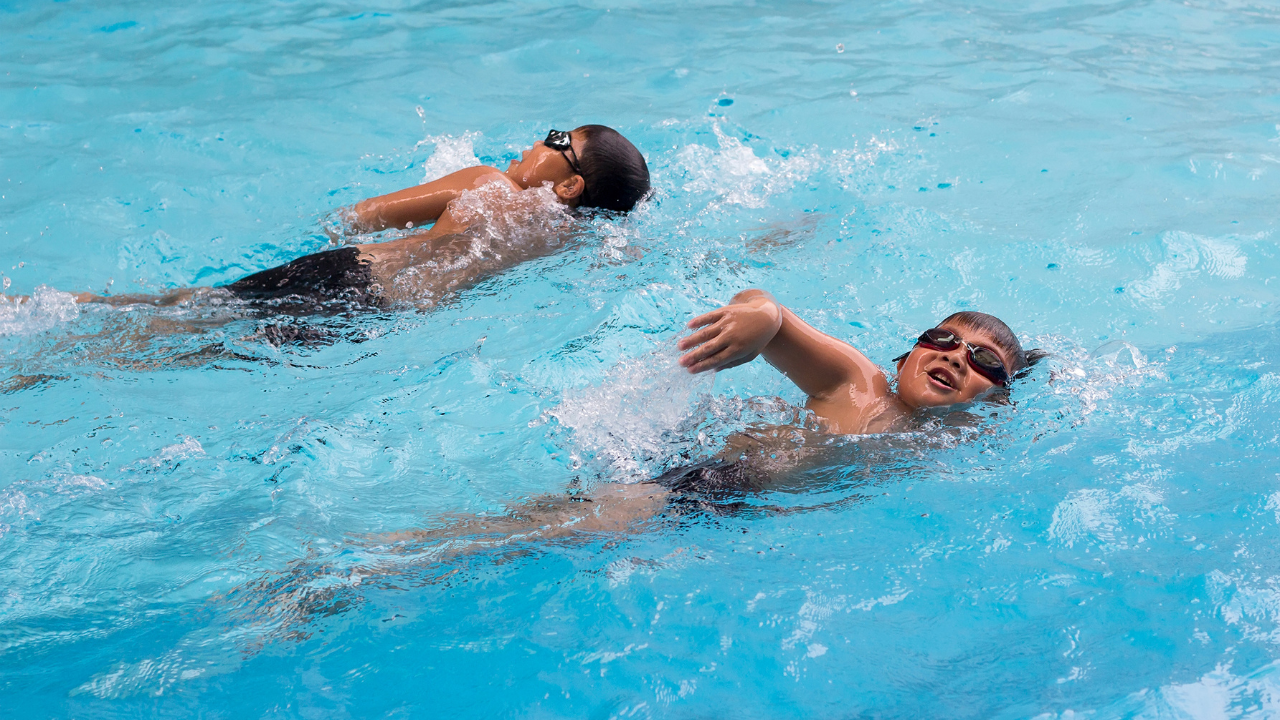
Freestyle swimming, better known as front crawl, is swum face down with alternating arm movements and a continuous flutter kick.
The mechanics are simple: as one arm reaches forward and enters ahead of the shoulder, the other arm pulls back past the hip. Your body rolls slightly with each cycle, and that roll is what lets your mouth clear the surface.
Two things separate a smooth freestyle stroke from an exhausting one:
Extend fully before you pull, so each arm stroke covers as much water as possible
Drive the kick from the hip rather than the knee, with pointed feet so your ankles don’t act like brakes
Your breathing rhythm should also follow the body roll, turning the head just far enough that one eye stays under. Most beginners lift the head too high, which drops the hips and kills forward momentum.
It’s also the fastest of the four strokes by a clear margin: the men’s 50m world record, set by Australia’s Cameron McEvoy in 2026, stands at 20.88 seconds.
If your goal is lap swimming, cardiovascular endurance, and burning a significant amount of calories, this is the stroke that gets you there.
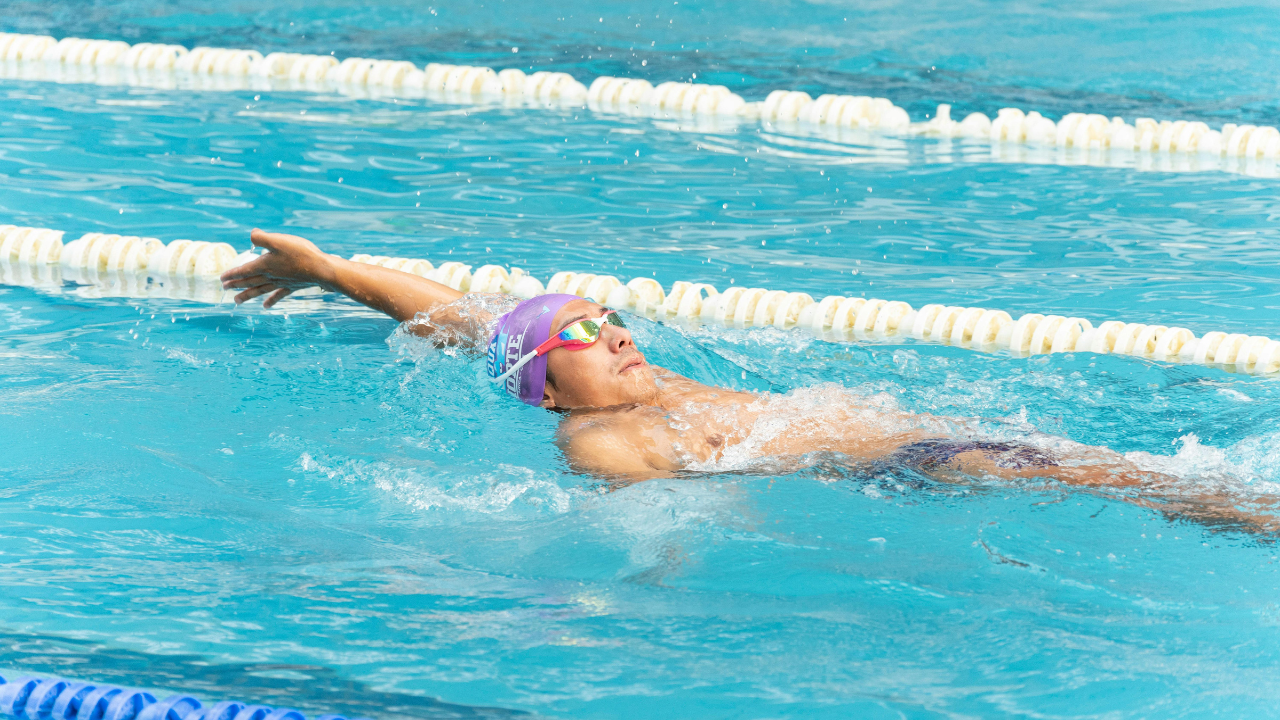
Backstroke, or back crawl, is the only competitive stroke swum entirely on the back.
Like freestyle, your arms move in an alternating windmill motion, with the little finger entering first, so that one arm performs the pull while the other recovers over the surface.
The flutter kick continues underneath, with the knees staying below the surface.
For beginners, the appeal is the breathing. Your face stays out of the water, so breathing is unrestricted, and you settle into a steady rhythm instead of shaping your breathing patterns around every stroke cycle.
The trade-off is that you can’t see where you’re going. Most learn to count strokes or use the ceiling and lane flags as a reference point.
Swimming on your back also opens the chest and works the muscles supporting your spine, which makes it useful for posture and for learning to maintain balance in the water.
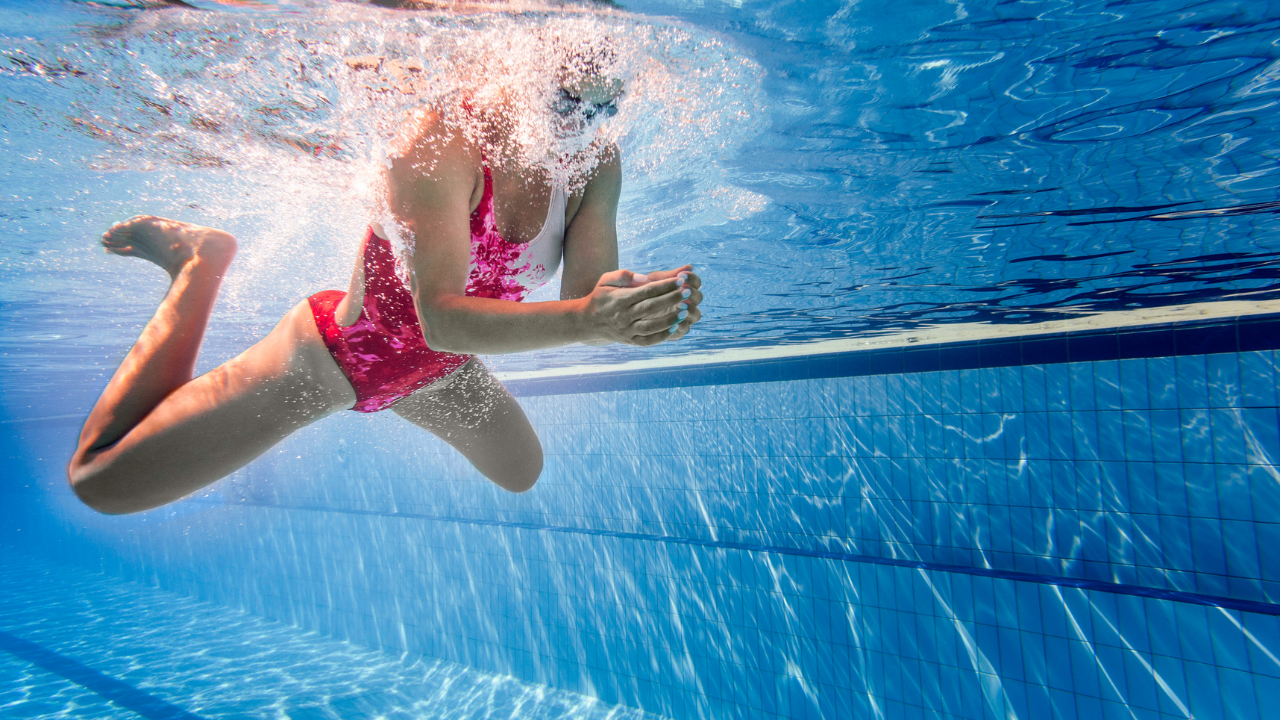
Breaststroke is the most common stroke in Singapore’s public pools, built around simultaneous arm movement paired with a frog kick — also known as the whip kick, or simply the breaststroke kick.
Both arms begin extended in front, sweep out and around in a circular motion, and the hands meet under the chest before the arms push forward again.
As the arms recover, the legs draw up with the feet outward, then whip out before coming together.
That timing — one arm stroke to one leg kick, in that order — is what the rulebook requires; get it right and the extended gliding phase carries your body forward with almost no effort.
Breaststroke builds real strength in the inner thighs, chest, and upper back, and its glide phase makes it efficient for energy conservation over longer swimming laps.
It is also the slowest of the four competitive strokes, but that’s no drawback for a beginner, as being able to lift your head and breathe every cycle is exactly why so many people learn it first.
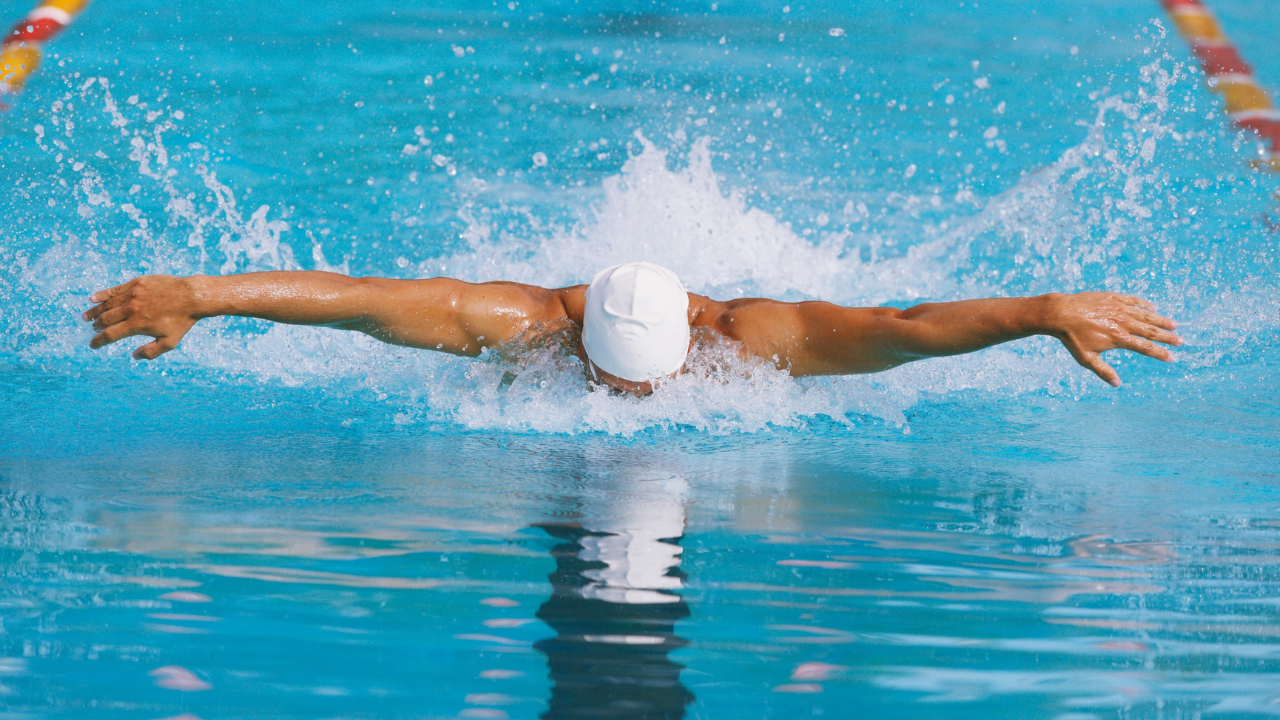
The butterfly stroke is the most physically demanding to learn: with arms forward and pulled together, they sweep back under the body in a catch, then recover forward over the water at the same time, while the legs perform a dolphin kick — two kicks for every arm cycle.
The chest presses down, and the hips lift in a wave-like motion that drives the stroke; upper arm and shoulder strength, plus precise timing, carry it more than raw power.
The rules explain the look of it: both arms must move forward over the water and back under it simultaneously, with every kick at the same time too.
There’s no cheating the symmetry, which is why butterfly demands excellent timing plus strong upper body and upper arm strength.
It’s the second fastest stroke, so treat it as a goal rather than a starting point.
Most instructors save it for last, after both your freestyle and upper body strength are solid, and teach it with a kickboard or swimming one arm at a time with the other arm free rather than full laps at first.
Not every useful stroke is a racing stroke. These two won’t win medals, but they’ll keep you moving when you’re tired.
Sidestroke involves lying on one side, with a top arm and bottom arm working asymmetrically in what’s sometimes called the “picking an apple” pull, paired with a scissor kick — the top leg reaches forward and the bottom leg back before both snap together.
Because the face stays clear and one arm is free at all times, sidestroke is a standard tow stroke in lifeguard and water-rescue training.
The US Navy SEALs teach a variant called the combat sidestroke: blending sidestroke, front crawl, and breaststroke with a corkscrew swimming rotation.
The takeaway for the rest of us: don’t rush the glide phase. That pause is where the efficiency lives.
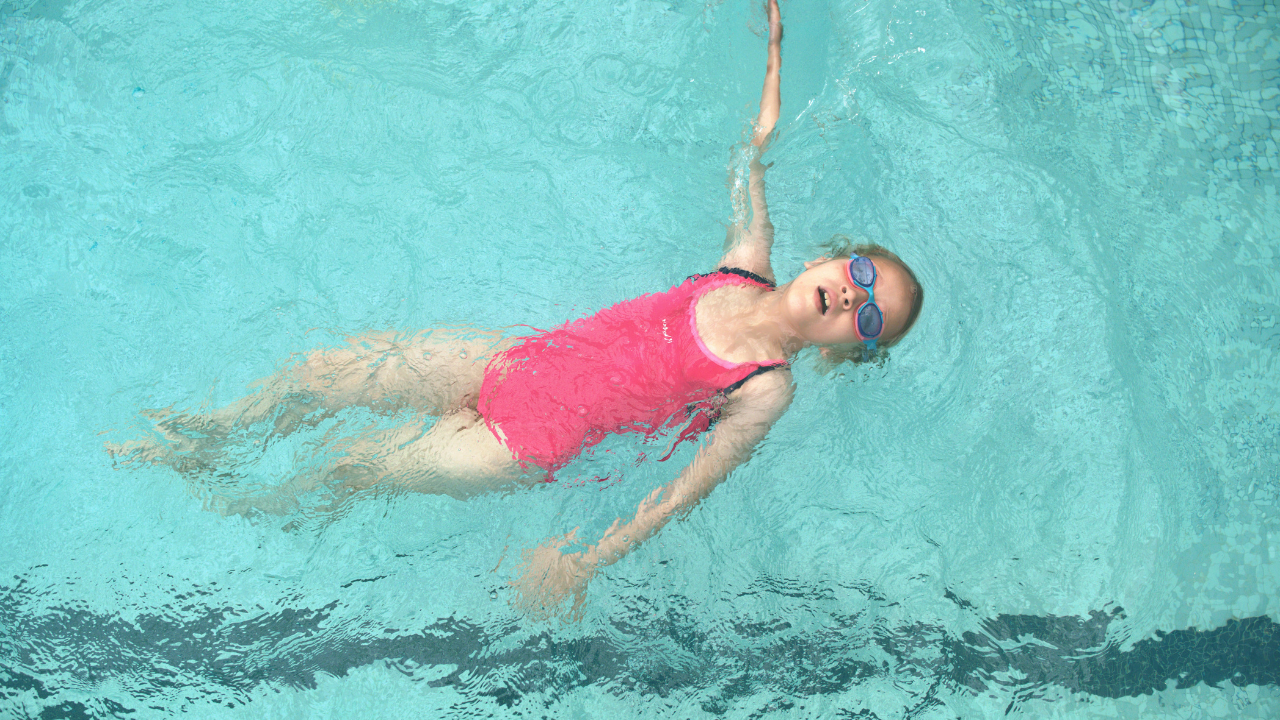
Elementary backstroke is essentially a reversed breaststroke kick performed on your back.
The arms slide up the sides, extend out to shoulder height, then push down to the hips while the legs whip out and together, and that whip supplies most of the forward motion before gliding.
There’s no face-in-water breathing and no arm recovery over the surface, which is why this older swimming style is still taught today.
It’s the stroke to reach for when you need to catch your breath mid-session, and a good way to practise rhythmic breathing before attempting full backstroke.
There’s no universal right answer, but there is a sensible way to choose.
Start with freestyle if your goal is fitness and endurance, as it’s the most efficient stroke for covering distance and the one you’ll default to in any timed lap swimming session.
Start with breaststroke if putting your face in the water still feels stressful; the head lifts naturally on every cycle, and the built-in glide gives you a rest point other strokes don’t offer.
Choose backstroke, or elementary backstroke, if breathing is your sticking point, since your airway stays clear throughout.
Leave butterfly until your freestyle catch and core control feel reliable — it’s usually the last of the different strokes beginners take on.
That order matters more than most people realise, which is why structured adult swimming lessons follow a deliberate progression instead of teaching all four at once.
Children here learn the same way through the national SwimSafer 2.0 syllabus, which runs across six stages and introduces different swimming strokes, starting with 25 metres of continuous swimming before building distance and variety.
The principle holds at any age: comfort before distance, distance before variety, variety before speed.
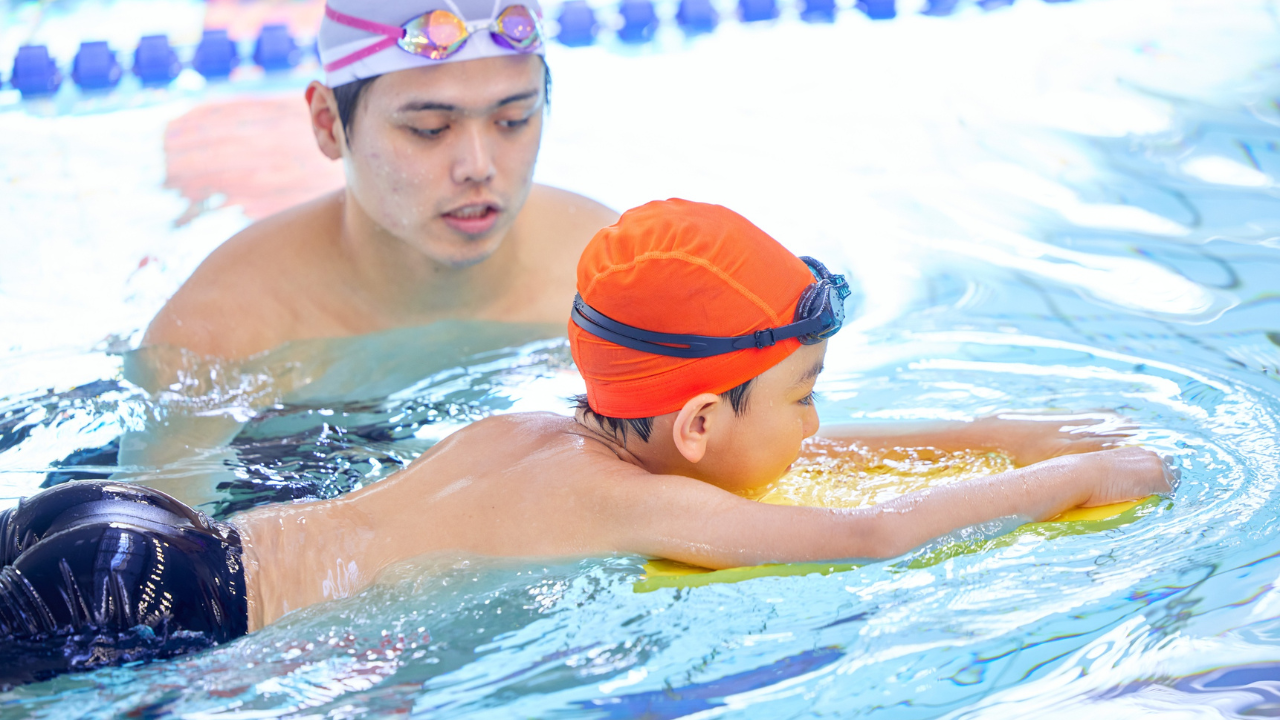
That outside eye is the fastest way to stop guessing at proper technique.
Swimwerks runs group and one-to-one sessions at ActiveSG and condominium pools island-wide, with coaches certified by NROC and SSI. Every lesson opens with an assessment of your water confidence and current ability before any new skill is introduced.
Group classes are capped at 4 to 6 students per coach, so there’s room for actual correction rather than queueing at the wall.
Women who prefer a smaller, all-female setting can train with certified female instructors, while private swimming lessons offer a fully personalised plan and consistent practice at a pool of your choice with flexible timing that suits you.
If you’d like to see how it fits first, message the team on WhatsApp to book a trial lesson!